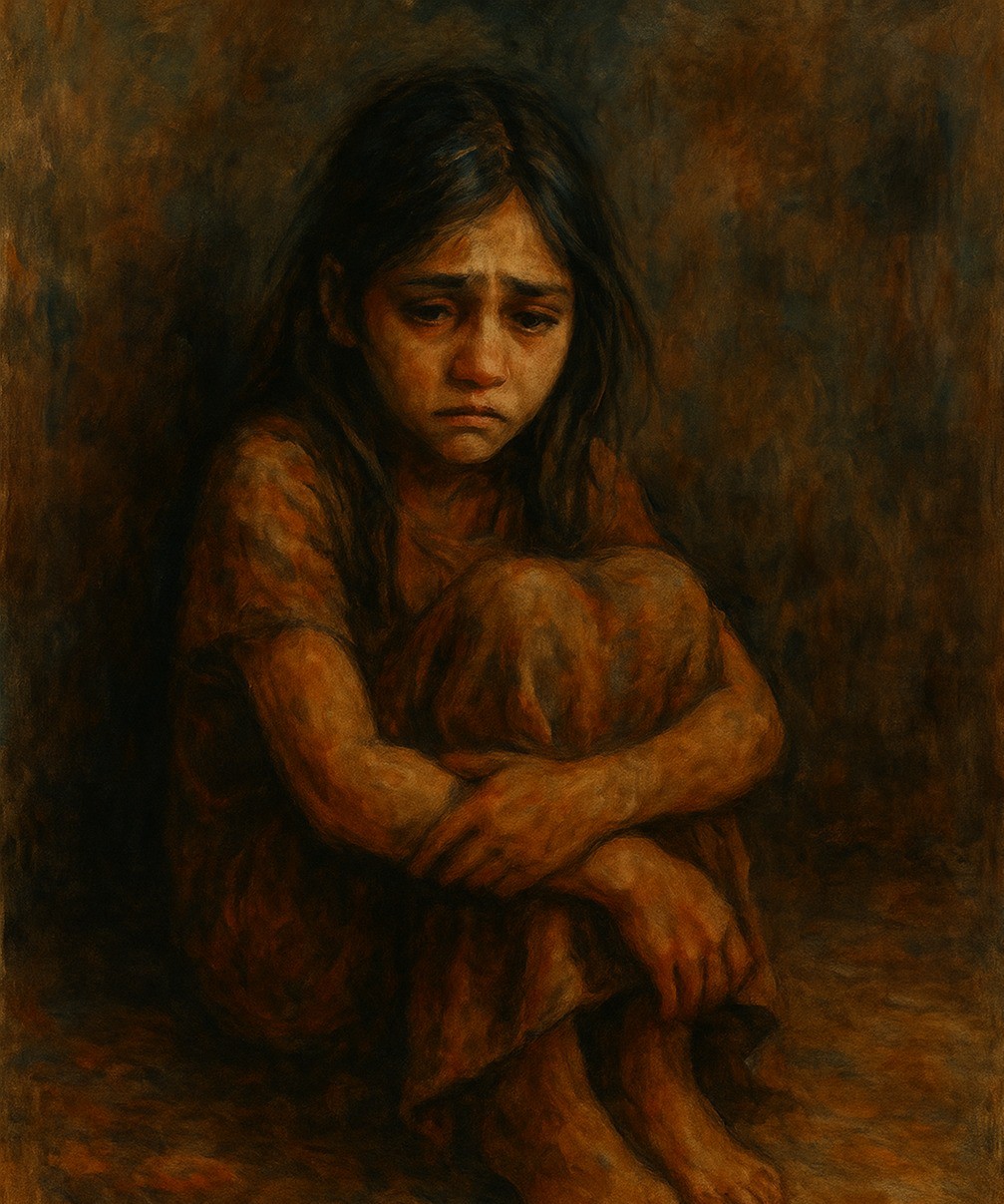
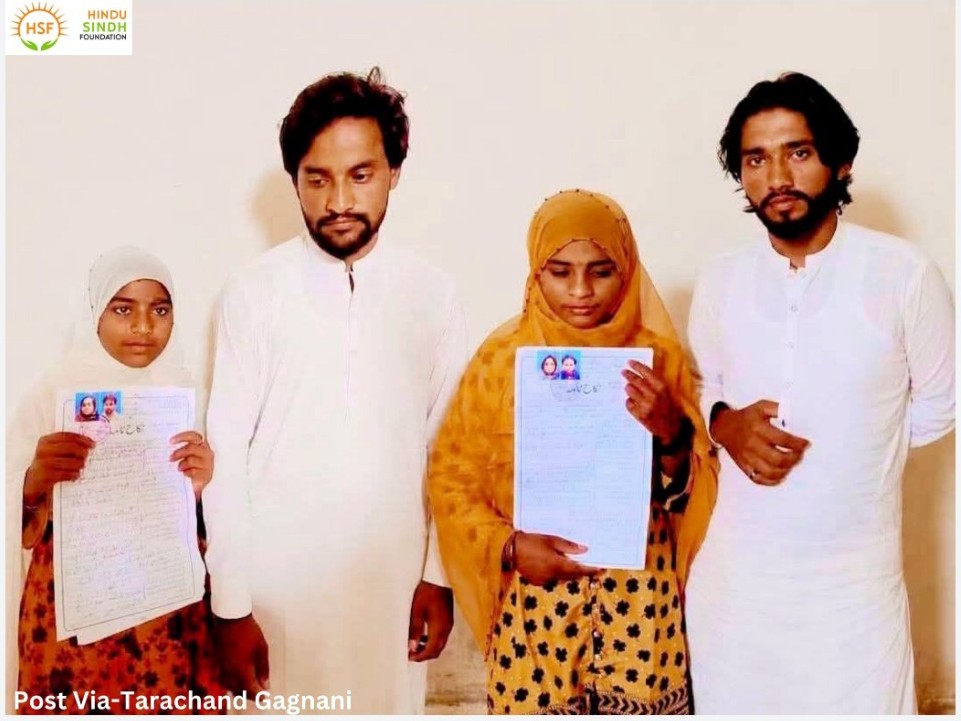
TANDO ALLAHYAR, Sindh🇵🇰- September 9, 2026: Two Hindu sisters from Ibrahim Colony in Tando Allahyar were presented before a court on Wednesday in connection with a reported kidnapping case that emerged last week, amid allegations by their family and minority-rights advocates that the girls were abducted, converted to Islam and subsequently married.
The case has attracted significant attention because the girls are reportedly minors. Publicly circulating information identifies the sisters as Roopi and Seeta, daughters of a man identified as Raamji, and alleges that they were married to Amjad Solangi and Mansoor Solangi, respectively.
However, the circumstances surrounding their disappearance, their exact ages, the alleged conversions and the reported marriages have yet to be independently established by this publication. These matters should be determined through police records, birth-registration documents, NADRA records, court proceedings and other competent evidence.
Girls reportedly ask to return to their parents
Following Wednesday’s court proceedings, the two girls were ordered to be kept in a safe house for two days, according to information provided about the case.
People present outside the court reported hearing the girls repeatedly appeal to be allowed to return to their families, saying:
“Let us go to our parents.”
Their families maintain that both girls are minors and have called for their immediate protection and a transparent investigation into the circumstances of the case.
The reported statements have added another important dimension to the case: authorities must establish the girls’ wishes in circumstances where they can speak freely, independently and without pressure from any party.
If the girls are minors, their age and vulnerability should be taken into consideration throughout the investigation and any judicial proceedings.
Age could be central to the legal questions
The reported ages of the two girls are among the most important unresolved issues.
Information circulated by individuals raising concerns about the case claims that official documents place one sister at 13 years old and the other at 14. This publication has not independently examined those documents, and the authenticity of the records has not been publicly confirmed by the relevant authorities.
If those ages are verified, both girls would fall within the definition of a child under the Sindh Child Marriages Restraint Act, 2013, which defines a child as a person under 18 years of age, regardless of sex.
The legislation provides penalties for contracting, conducting, facilitating or otherwise bringing about a child marriage. It also classifies offences under the Act as cognizable, non-bailable and non-compoundable.
Consequently, establishing the girls’ ages through authoritative records should be a priority for investigators.
Allegations of abduction and conversion remain unproven
The family and supporters have alleged that the sisters were abducted and subsequently subjected to forced religious conversion before their reported marriages.
These are serious allegations, but they remain allegations unless established through evidence and findings by competent authorities.
The investigation should establish, among other things, when and where the girls disappeared, who they were with when they were located, whether they travelled voluntarily or were taken against their will, when any conversion allegedly took place, and under what circumstances the reported marriages occurred.
The question of religious conversion should also be examined separately from the question of the girls’ safety and freedom of choice.
A change in religious identity by itself does not establish coercion. Conversely, an allegation of voluntary conversion should not prevent authorities from investigating claims of abduction, threats, coercion or exploitation.
Calls for protection and independent statements
Rights advocates and the girls’ family have urged authorities to ensure that the sisters remain protected while the investigation continues.
If the girls are minors, their statements should be obtained in a child-sensitive and independent environment, away from individuals who could potentially influence, intimidate or pressure them.
Their wishes should be assessed carefully, taking into account their ages and circumstances.
The reported plea to return to their parents therefore warrants careful consideration. It should neither be dismissed automatically nor treated, by itself, as conclusive evidence of the wider allegations. The circumstances in which the statements were made must also be examined.
Previous cases have raised similar concerns
The Tando Allahyar case has also prompted comparisons with earlier cases involving Hindu women and girls in Sindh, including the widely reported case of Rinkle Kumari.
In that case, questions and competing claims emerged regarding the circumstances surrounding Kumari’s conversion, marriage, custody and subsequent statements. The case remains part of the broader public debate in Pakistan about the protection of minority women and girls and the circumstances in which religious conversion and marriage claims are examined.
The comparison should not be taken to mean that the circumstances of the present case are identical. Rather, it highlights why authorities should ensure that young or vulnerable individuals are able to make statements without coercion or outside influence.
Questions authorities need to answer
Several important questions remain outstanding in the present case:
- What do the girls’ official birth records and NADRA records establish about their ages?
- Has an FIR been registered regarding their reported disappearance or alleged abduction?
- What evidence has been collected concerning how and where the girls were located?
- When and where did the alleged conversions take place?
- Who conducted or facilitated the reported marriages?
- What does the court record state about the girls’ ages and statements?
- Were the girls able to speak independently and without pressure?
- What evidence supports or contradicts the family’s allegations?
- Have child-protection authorities formally assessed the girls’ welfare and safety?
Answering these questions through official records and a transparent investigation is essential before definitive conclusions are reached.
Protect the girls, establish the facts
The central concern should be the safety, dignity and legal rights of the two young girls.
If an investigation establishes that they were abducted, coerced, subjected to forced conversion or unlawfully married as minors, those responsible should be prosecuted in accordance with Pakistani law.
If the evidence establishes a different account, that should also be made clear through a credible and transparent legal process.
What matters now is that neither the girls nor the investigation becomes subject to political, religious or communal pressure.
The authorities should ensure that the sisters remain safe, that their statements are recorded independently, and that all relevant evidence- including official age records—is properly examined.
The allegations must be investigated.
The girls must be protected.
Their voices must be heard freely.
And the truth must be established through due process.