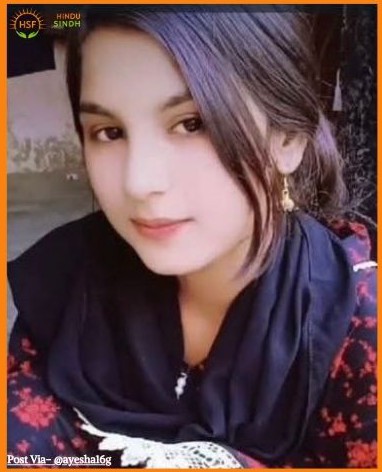
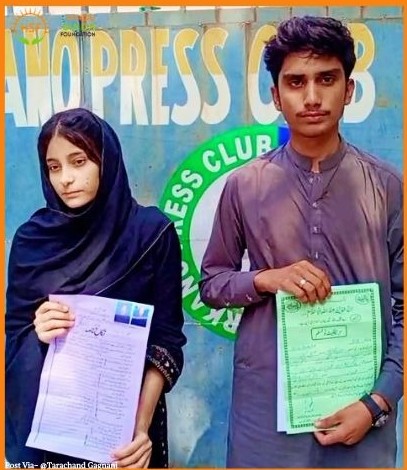
SIBI / LARKANA, Sindh🇵🇰– The reported conversion and marriage of a Hindu girl from Sibi, identified in accounts as Bindiya or Bandia and reportedly renamed Yasmeen, have raised serious questions about child protection, religious freedom, consent and the responsibility of law-enforcement authorities.
According to information circulating about the case, Bindiya is a ninth-grade student who reportedly left home with Yasir Domki, described as a tenth-grade student from Bakhshapur. The account claims that the pair travelled to Mian Mithu, where a religious conversion ceremony and nikah allegedly took place. They were subsequently reported to have arrived in Larkana and sought protection from the authorities.
However, the circumstances surrounding the incident remain unclear. One account raises concerns about possible abduction, forced religious conversion and child marriage, while another maintains that the girl left voluntarily and chose to convert and marry of her own free will.
These competing claims require independent verification. The girl’s exact age, the circumstances of her departure and marriage, and whether she has been able to express her wishes freely must be established through a transparent investigation and appropriate legal procedures.
Mian Mithu and the wider debate over alleged forced conversions
The reported reference to Mian Mithu has brought renewed attention to a longstanding and deeply contested issue in Sindh: allegations of forced religious conversion and marriage involving Hindu girls and women from minority communities.
Mian Mithu, also known as Pir Abdul Haq, is associated with the Bharchundi Sharif shrine in Ghotki. Dawn has reported on allegations linking him to controversial conversion cases, including that of Rinkle Kumari, who was later known as Faryal Bibi. He has repeatedly denied allegations of forced conversion.
In December 2022, Dawn reported that the United Kingdom had imposed sanctions on Mian Mithu over human rights concerns, including forced marriages and religious conversions. The report also noted that he had denied the allegations. These historical reports provide context for the wider debate but do not establish what happened in Bindiya’s case.
The question that deserves public scrutiny is this: When allegations involving the conversion and marriage of a potentially underage girl emerge, why are the circumstances not independently investigated and the relevant evidence made public through lawful procedures?
No individual should be presumed guilty without evidence. Equally, allegations involving a child’s safety should not be dismissed merely because a statement of consent has been circulated or reported.
The girl’s voice, safety and legal rights must come first
A video statement alone cannot conclusively establish whether a minor has acted freely or under pressure. Authorities must establish the girl’s age, ensure she can communicate privately and safely with appropriate professionals, and assess whether intimidation, coercion or undue influence may be involved.
Her family and community should not be permitted to dictate her wishes, nor should any other individual or group be allowed to influence her through threats or pressure. The investigation must be impartial, evidence-based and consistent with applicable law.
If abduction, coercion, unlawful marriage or any other offence is established, the responsible individuals must be held accountable through due process. The girl must receive appropriate protection, independent legal assistance and access to education and other essential services.
Protecting minority girls is a shared responsibility
The case also raises broader concerns about the safety and rights of religious minorities in Sindh. Families deserve confidence that complaints involving missing children, suspected abductions or potentially unlawful marriages will be handled promptly and impartially.
The provincial government, police, child-protection authorities and courts must ensure that every case is examined on its own evidence, without discrimination based on religion, gender or social status.
Justice for Bindiya- if the allegations are substantiated—must mean more than public statements or political assurances. It must mean a credible investigation, protection from coercion, accountability under the law and respect for the rights and dignity of the girl concerned.
Every girl deserves the freedom to live safely, continue her education and make decisions about her future without fear, intimidation or exploitation.
For more updates and detailed coverage of this case and other issues affecting the Hindu and Sindhi communities in Sindh, Pakistan, stay tuned to Sindh Renaissance.