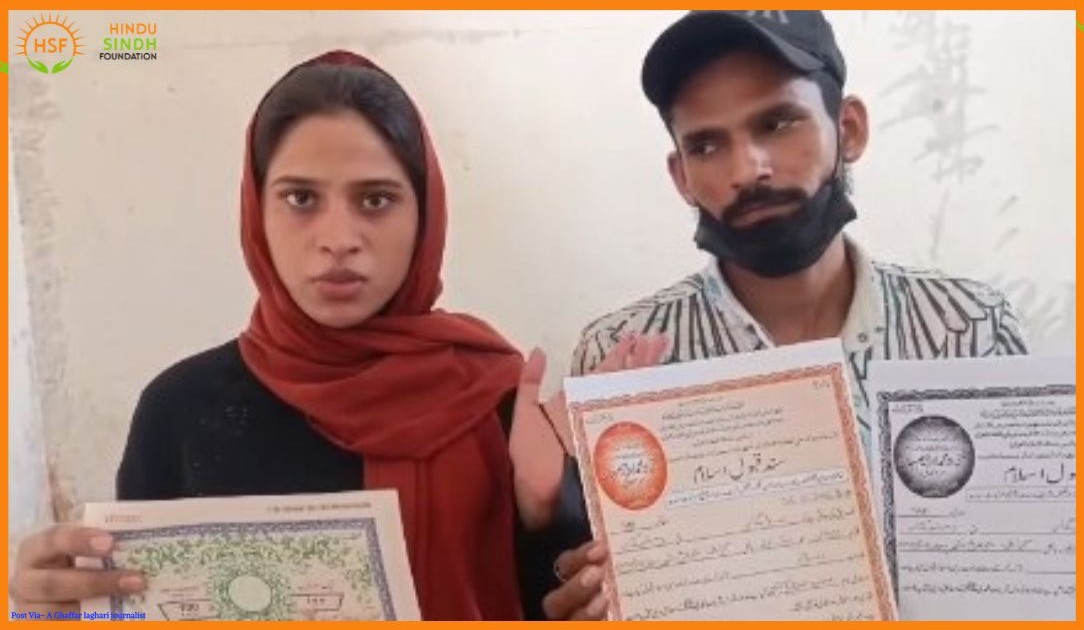
KARACHI🇵🇰: A young Karachi woman, identified in documents as Areeba Shabir Shaikh, has said that she married Muhammad Abdullah, son of Ramesh Kumar, of her own free will after embracing Islam, and that law-enforcement authorities are providing protection to the couple.
In a video statement, the woman reportedly spoke exclusively with journalist, explaining her position regarding the marriage and the protection she says has been extended to her by police and other law-enforcement authorities.
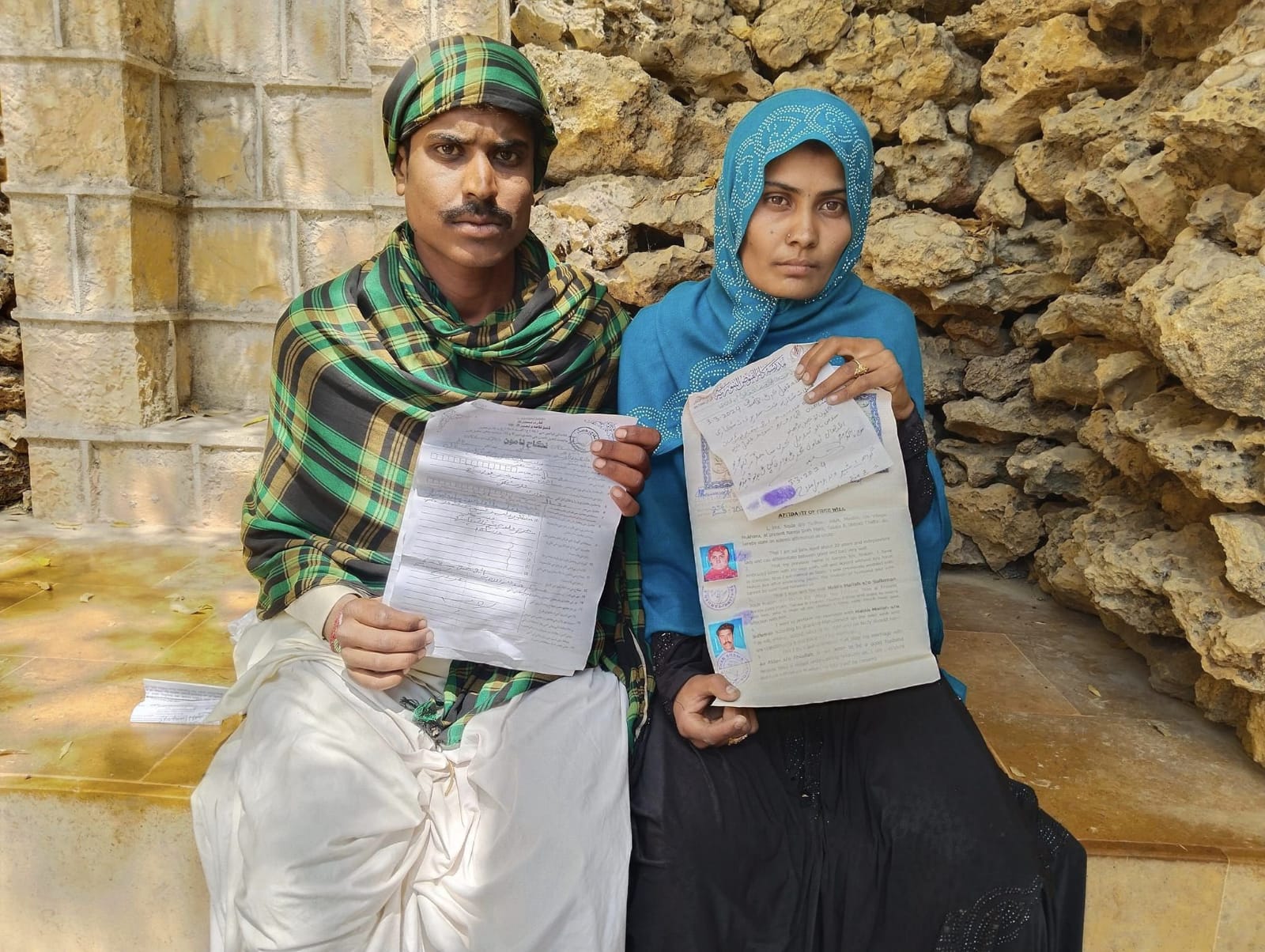
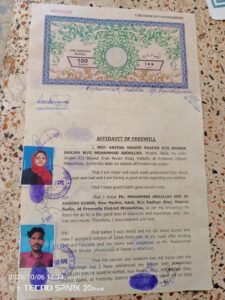
According to an affidavit of free will made available in connection with the case, Areeba Shabir Shaikh, daughter of Shabir Shaikh, describes herself as an adult, mentally sound and capable of making decisions concerning her welfare.
The affidavit states that she knows Muhammad Abdullah, son of Ramesh Kumar, and considers him a good man with a good reputation. It further states that she married him willingly.
Affidavit states she embraced Islam
According to the document, the woman says she was previously a Hindu and that her former name was Suneel. She states that she accepted Islam voluntarily after reciting the Kalma-e-Tayyaba.
The affidavit further says that her parents and relatives did not agree with the marriage, but that she nevertheless solemnised her Nikah with Muhammad Abdullah.
The document gives the date of marriage as October 6, 2026 and identifies the woman as a resident of Bilawal Shah Noorani Road, Karachi, while stating that she was presently in Mirpurkhas.
Nikah Nama records Muhammad Abdullah as groom
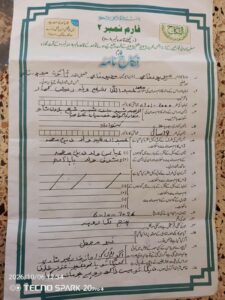
A copy/translation of the Nikah Nama, Form No. 2, supplied for review, identifies the groom as Muhammad Abdullah Shaikh, son of Ramesh Kumar, and describes him as a new Muslim.
The document appears to record the bride’s age as approximately 19 years, although some handwritten portions are difficult to read. The CNIC numbers have not been reproduced because they are not sufficiently legible and constitute sensitive personal information.
The Nikah Nama also contains entries relating to a bride’s representative, or wakeel, and witnesses. Some of the handwritten names and details are unclear in the supplied copy and therefore cannot be independently confirmed from the image alone.
The date entered on the document is October 6, 2026.
Under Section 5 of Pakistan’s Muslim Family Laws Ordinance, 1961, Muslim marriages are required to be registered, with the law providing for licensed Nikah Registrars and registration through the relevant Union Council.
Woman says she is being protected
In her reported video statement, the woman discusses the protection being provided to her by law-enforcement agencies and Karachi Police.
However, independent confirmation from Karachi Police or another official law-enforcement authority was not located in the public sources reviewed for this report. The claim is therefore being reported as part of her statement rather than as an independently verified police position.
Questions surrounding conversion and interfaith marriages
The case has also prompted discussion on social media and among observers about interfaith marriages and religious conversion, particularly in Sindh.
The central issue raised by the woman’s statement is whether an adult who says she has made an independent decision about her religion and marriage should be allowed to exercise that choice without intimidation or pressure from either family or society.
At the same time, allegations or concerns surrounding forced conversion, coercion or abduction in any individual case require independent investigation and should not be presumed solely from a marriage document or a video statement.
In this case, the affidavit expressly presents the woman’s position as one of free will.
Document discrepancy requires clarification
There is one notable point in the supplied material that requires clarification before publication as an established fact.
The affidavit, as translated and provided, says the woman formerly used the name Suneel and then contains wording suggesting that the name Muhammad Abdullah Shaikh was adopted after conversion. However, Muhammad Abdullah Shaikh is also identified in the same material as the husband/groom.
This appears potentially to be a transcription, translation or document-reading issue. The original affidavit should therefore be checked before stating the woman’s post-conversion name as a confirmed fact.
Similarly, the supplied information refers to Muhammad Abdullah as the woman’s lawyer in one account, while the Nikah Nama appears to contain a separate entry for a wakeel. These descriptions should be verified against the original documents and video before being stated as fact.
What the documents establish- and what remains unverified
Based on the material supplied to this newsroom:
- The affidavit identifies the woman as Areeba Shabir Shaikh.
- It states that she is an adult and says she made the marriage decision voluntarily.
- It states that she was previously Hindu and embraced Islam.
- It identifies Muhammad Abdullah, son of Ramesh Kumar, as the man she married.
- It says her parents and relatives opposed the marriage.
- The marriage date stated in the documents is October 6, 2026.
- The supplied Nikah Nama identifies Muhammad Abdullah Shaikh as the groom and indicates that he is a new Muslim.
- The supplied material says the woman is receiving protection from law-enforcement authorities.
- No independent police confirmation of the protection claim was located in the public web sources reviewed.
The Pakistan Code publishes the Muslim Family Laws Ordinance, 1961, including its provisions concerning registration of Muslim marriages.
The couple’s case is likely to attract further attention because it touches on sensitive questions involving adult choice, interfaith marriage, religious conversion, family opposition and protection of individuals who say they have acted voluntarily.
For more updates and detailed coverage of this case and other issues affecting the Hindu and Sindhi communities in Sindh, Pakistan, stay tuned to Sindh Renaissance.