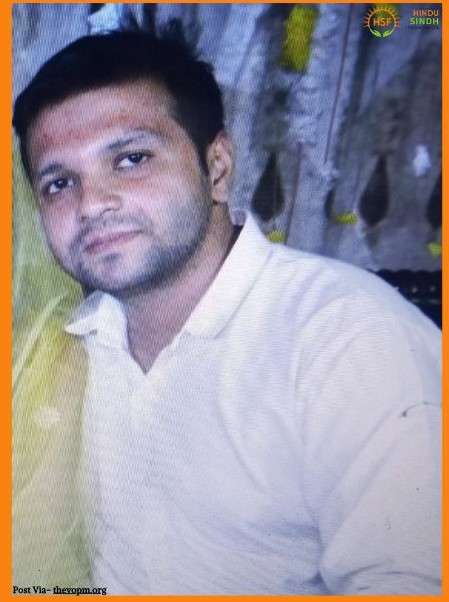
LAHORE,🇵🇰- A 26-year-old Christian man, Samuel Arif, has been arrested and placed in judicial custody in Lahore after a neighbour accused him of making derogatory remarks about Islam and harassing his two minor daughters.
Arif’s family denies the allegations and says the case arose from a personal dispute. Rights organisations assisting the family have called for an impartial investigation and protection for the accused, his relatives and witnesses.
The case was registered as FIR No. 806/26 at Lahore’s Muslim Town Police Station on August 29, 2026, under Sections 295-C and 298-A of the Pakistan Penal Code. Police arrested Arif the same day, according to reports citing the FIR.
What does the complaint allege?
According to the FIR, the incident allegedly occurred on August 28 in the Punjab University Staff Colony.
The complainant, Muhammad Umair Alam Khan, alleged that Arif approached his two minor daughters and made religiously offensive remarks. Reports quoting the FIR say Khan further alleged that Arif told the girls that the Prophet Muhammad had appeared to him in a dream and instructed him to marry them.
Khan also alleged that Arif had an unidentified substance on his hands and attempted to put it on the girls’ faces before they escaped. The complaint reportedly referred to CCTV footage in the area, although the material reviewed for this report does not independently establish what the footage shows.
These are allegations contained in a criminal complaint and have not been established by a court.
Reports of assault before police custody
The circumstances surrounding Arif’s arrest have also become a central concern.
According to accounts from his family and human-rights organisations, news of the accusation spread after the alleged incident and a group confronted Arif at a gym in the Staff Colony. The family says he was severely beaten before police arrived and took him into custody.
The reported assault has not been independently established through publicly available police or court records reviewed for this article. If confirmed, however, it would represent a separate criminal matter requiring investigation.
The distinction is important: an accusation of blasphemy does not legally authorise private individuals to assault or punish the accused.
Family rejects the allegations
Arif’s mother, Mukhtaran Bibi, has rejected the accusations and said her son is innocent.
Sohail Habel of Human Assistance & Development Services (HARDS Pakistan) told Voicepk that he had spoken directly with Arif, who denied committing blasphemy. Habel said the family believed the case was connected to personal enmity.
The family previously lived in the Punjab University Staff Colony, where Arif’s late father, Arif Masih, worked as a sanitary worker. After his father’s death, the family moved to Saint Mary’s Colony in Gulberg, although Arif reportedly continued visiting the Staff Colony to meet friends.
Lawyers Kashif Alexander Rajput and Nadia Hameed have agreed to represent Arif, according to HARDS and reports citing the organisation.
What does Pakistan’s law say?
Section 295-C of the Pakistan Penal Code concerns derogatory remarks regarding the Holy Prophet Muhammad. The current text of the Pakistan Code provides for death or imprisonment for life, along with a fine. Section 298-A concerns derogatory remarks relating to certain holy personages and carries imprisonment and/or a fine under the applicable law.
Because Section 295-C can expose an accused person to the most severe criminal punishment, a charge under the provision carries enormous legal and personal consequences even before a trial takes place.
Arif, however, remains an accused person, not a convicted offender.
A wider concern: violence after blasphemy allegations
Arif’s case comes amid longstanding concerns about vigilante violence associated with blasphemy accusations in Pakistan.
Human Rights Watch has documented cases in which people accused of blasphemy were attacked or killed outside the formal judicial process. Its 2025 report said mob and vigilante attacks related to blasphemy accusations had killed four people in 2024.
The United Nations has also raised concerns about violent attacks, mob lynchings and killings of people accused of blasphemy, particularly members of religious minorities.
A 2025 Human Rights Watch investigation further documented allegations that blasphemy laws have sometimes been exploited in disputes involving personal or financial interests. HRW said it interviewed people who had faced accusations as well as lawyers, prosecutors, judges, police officials and activists.
These broader findings do not establish that Arif’s accusation is false. They do, however, provide important context for why allegations in such cases require careful investigation and why the safety of an accused person must also be protected.
Evidence must be tested in court
The central question in Arif’s case is ultimately what the evidence shows.
The complainant has made specific allegations. Arif denies them. The reported existence of CCTV footage, statements by the alleged victims and any other physical or forensic evidence should be examined through the investigation and, where appropriate, tested through the judicial process.
At the same time, any allegation that Arif was assaulted by a crowd should be investigated separately. If people attacked him before police custody, those responsible should be identified and dealt with according to law.
For now, the case remains at the allegation and investigation stage.
For more updates and detailed coverage of this case and other issues affecting the Minor communities in Pakistan,