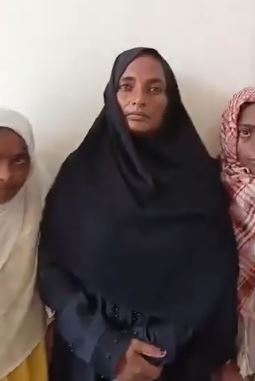
Mirpurkhas, Sindh🇵🇰 In yet another chilling reminder of the plight faced by religious minorities in Pakistan, Diya Bhat, a Hindu woman who was allegedly forcibly converted to Islam four years ago, has finally reappeared—this time in a court in Mirpurkhas—accompanied by her two sons and a daughter.
Diya, who was renamed “Maryam” after her conversion, made grave allegations in court against Ghulam Mustafa Shoro, a resident of Malhi Colony. She stated that he not only forcibly converted her but also kept her and the children at different unknown locations over the years. Shockingly, Diya revealed that her 16-year-old daughter, Pooja, is still missing, sparking deep concerns about her safety and whereabouts.
The case came to light when Raju Bhat, Diya’s former husband, petitioned for her and the children’s return. Upon his request, the police brought Diya and the children to court. After reviewing the circumstances, the court ordered Diya and the children to live with Raju and directed the police to provide protection to the family.
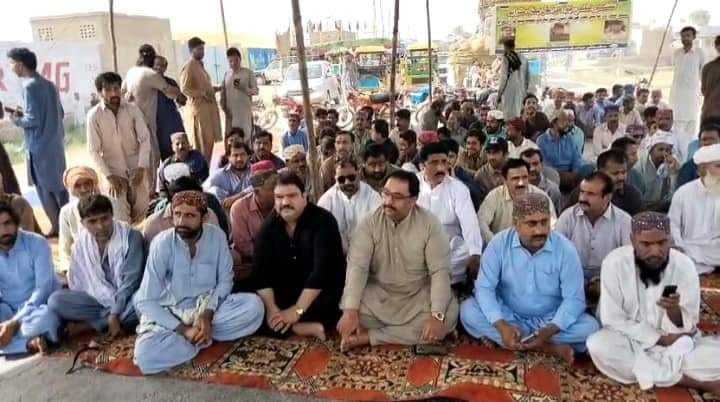
Raju’s legal representative, Advocate Mahfuz Laghari, also addressed the matter during a live conversation video, emphasizing the long-standing neglect of minority rights in Pakistan and the need for urgent legal reform.
A Broader Pattern of Abuse
Diya’s case is not an isolated incident. It echoes the ongoing pattern of forced conversions, abductions, and sexual violence against minority girls in Pakistan—especially Hindus and Christians. Activists and human rights defenders have reported that hundreds of minority girls are abducted every year, often coerced into converting to Islam and married off to their captors under threat or manipulation.
Yet, Pakistan’s legal system remains alarmingly inadequate in preventing these atrocities or ensuring justice for victims. While constitutional provisions exist to protect religious freedom, they are rarely enforced when it comes to vulnerable minorities.
International Silence and Inaction
Despite the mounting evidence of systematic abuse, international bodies, including the United Nations Security Council (UNSC), have remained largely silent. There has been no meaningful intervention or pressure to hold perpetrators accountable or to compel the Pakistani government to reform its legal system in favor of minority protections.
A Cry for Justice
The return of Diya Bhat and her children is a small victory in a sea of injustice—but it also serves as a painful reminder that thousands of girls like Pooja remain missing, silenced, or trapped in forced marriages.
Until Pakistan enforces strict laws against forced conversion and underage marriage, and until international organizations stop turning a blind eye, these atrocities will continue—unchecked and unchallenged.
No family should be torn apart for their faith. No daughter should disappear in the name of religion. And no justice system should allow it to happen.
For more updates and detailed coverage of this case and other issues affecting the Hindu and Sindhi communities in Sindh, Pakistan, stay tuned to Sindh Renaissance.