Umerkot/Ghotki, Sindh🇵🇰– Calls are growing for an impartial investigation into the reported case of Kalpana Meghwar, a Hindu girl whose family and supporters allege that she was abducted, forcibly converted to Islam and married while underage.
The allegations have raised urgent questions about child protection, religious freedom, consent and the enforcement of Sindh’s child-marriage legislation.
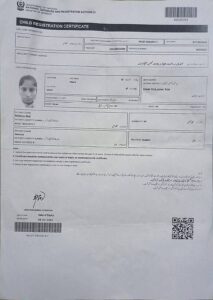
According to information provided by people raising concerns about the case, Kalpana is reportedly 14 years old, and her age is said to be documented in a National Database and Registration Authority (NADRA) B-Form. The B-Form has not been independently examined for this report, and the allegation that she is 14 requires confirmation through official records.
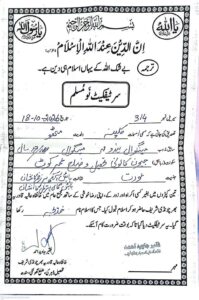
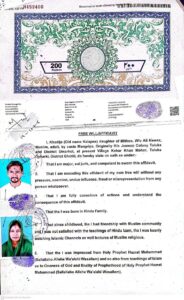
A document titled Free Will Affidavit, supplied in connection with the case, identifies the individual as “Khadija (old name Kalpana),” daughter of Mithoo and wife of Ali Nawaz. It describes her as an adult and states that she is acting voluntarily, without pressure, coercion, fraud or undue influence.
The affidavit also states that she was born into a Hindu family and later developed an interest in Islam.
These declarations are relevant to understanding the competing accounts surrounding the case. However, the visible document alone does not independently establish her age, prove that a marriage occurred lawfully or settle whether her decisions were made freely. The authenticity of the document and the circumstances in which it was prepared also require independent verification.
Age verification is central to the case
The most pressing question is whether Kalpana is a minor or an adult.
If her age is confirmed as 14, the case would raise serious concerns under Sindh’s child-marriage legislation. If official records establish that she is an adult, her right to make personal decisions must also be respected.
The relevant authorities should examine her NADRA records, birth registration, school documents and any other reliable evidence. If necessary, age determination should follow appropriate legal procedures.
Authorities should also ensure that she can communicate her wishes privately and safely, without intimidation or pressure from family members, religious representatives or other interested parties.
A person’s declaration of consent deserves consideration, but it should not prevent an independent investigation where credible evidence raises concerns about age, coercion or exploitation.
What Sindh law says about underage marriage
The Sindh Child Marriages Restraint Act, 2013, establishes 18 as the minimum age for marriage and provides penalties for offences covered by the law.
The legislation was enacted as Sindh Act No. XV of 2014 and came into force in June 2014. It applies regardless of religious identity.
If evidence establishes that a marriage involving a person under 18 has taken place, police and other competent authorities should investigate the circumstances and take appropriate action under the applicable law.
Any decision in Kalpana’s case must be based on verified evidence rather than assumptions about her age, religion or personal wishes.
A wider concern in Sindh
Cases involving alleged abductions, religious conversions and marriages of minority girls have repeatedly drawn public attention in Sindh.
In a separate case documented by the United States Commission on International Religious Freedom (USCIRF), a Hindu girl named Saneha Meghwar was reported to have been abducted in May 2025, forcibly converted and married. The organisation’s database states that an affidavit was produced claiming that the conversion and marriage were voluntary.
That case is separate from the allegations concerning Kalpana Meghwar and must not be treated as evidence that the same circumstances occurred in her case. It does, however, illustrate why allegations involving minors, conversion and consent require careful, independent examination.
Calls for immediate and impartial action
Those raising concerns about Kalpana’s reported case are calling on the Sindh government, police, child-protection authorities, the Sindh Human Rights Commission and the relevant courts to take appropriate action.
Their requests include:
- Verify her age: Examine the reported NADRA B-Form and other official records.
- Investigate the allegations: Determine whether abduction, coercion, unlawful marriage or any other offence occurred.
- Ensure her safety: Assess any risks to her welfare and provide appropriate protection where necessary.
- Establish her wishes independently: Ensure she can speak freely in a safe environment, without intimidation or undue influence.
- Ensure legal accountability: Register and investigate offences where the available evidence and applicable law warrant such action.
These steps would help establish the facts while protecting the rights and dignity of everyone involved.
Justice must come before religious division
The case should not become a source of hostility between religious communities. The same legal standards and protections must apply to every child, whether Hindu, Muslim, Christian or from another religious background.
Religious freedom and personal autonomy are important rights. Equally, children are entitled to protection from exploitation, coercion and underage marriage.
The appropriate response is neither to dismiss the affidavit nor to accept every declaration within it without scrutiny. Authorities must establish the facts independently, apply the law fairly and ensure that the individual’s safety and rights are protected.
A 14-year-old, if that age is verified, is a child under Sindh’s child-marriage law- not an adult simply because a document describes her as one.
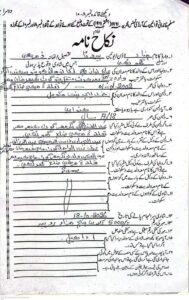
Justice for Kalpana Meghwar means finding the truth, protecting every child’s rights and ensuring that no allegation of abuse is ignored. The public deserves a transparent investigation, and the law must protect every girl without discrimination.
For more updates and detailed coverage of this case and other issues affecting the Hindu and Sindhi communities in Sindh, Pakistan, stay tuned to Sindh Renaissance.