
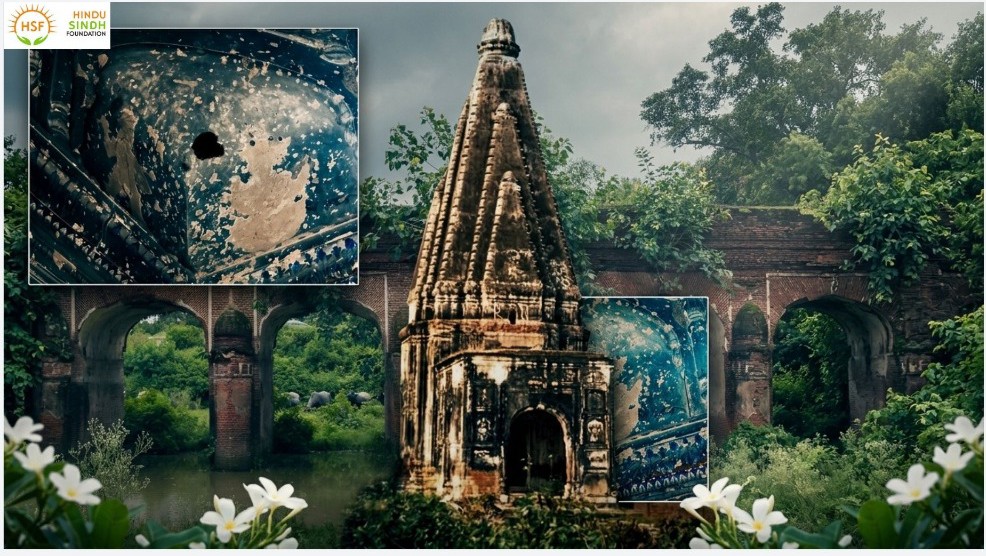
GUJRANWALA🇵🇰: Standing near Baddoki Gosaian along the Grand Trunk Road in Gujranwala district, the historic Tomari Sahib Temple is remembered as an important Hindu place of worship dedicated to Lord Shiva.
The temple is among the religious heritage sites that reflect the region’s long and diverse history, when Hindu, Sikh and Muslim communities lived alongside one another across the towns and villages of Punjab.
Located close to the historic GT Road, the shrine is associated with the Hindu religious tradition of Shaivism, in which Shiva is revered as one of the principal deities. The name “Tomari Sahib” is also locally associated with the shrine and its religious identity.
A link to Punjab’s religious heritage
Before the Partition of British India in 1947, the Gujranwala region had a substantial Hindu and Sikh population, and numerous temples, gurdwaras and other religious sites were scattered across the area.
The Partition brought major demographic changes to Punjab. Many Hindu and Sikh families migrated from areas that became part of Pakistan, while Muslim families moved in the opposite direction. As communities were displaced, numerous places of worship were left without their original congregations.
Tomari Sahib Temple forms part of this wider heritage of historic Hindu religious sites in Punjab. Its location near the GT Road is also significant because the road has historically connected settlements across northern India and Punjab, facilitating travel, trade and cultural exchange for centuries.
The temple today
Although the temple’s historical importance is recognized locally, detailed publicly available documentation about its original construction, patronage and architectural development remains limited. Claims concerning the precise age of the shrine or the circumstances surrounding its establishment require confirmation through archaeological records, revenue documents, historical accounts or research by heritage authorities.
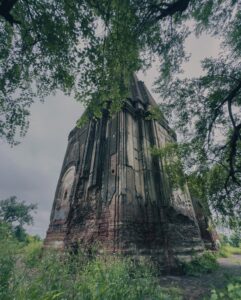
The surviving structure, however, provides an opportunity to examine the region’s religious and architectural past. Historic temples in Punjab often incorporated locally available materials and architectural traditions, while their religious spaces were organized around the central shrine.
For heritage researchers, documenting sites such as Tomari Sahib Temple is important because many smaller religious monuments outside major cities have received comparatively little scholarly attention.
Preserving a shared history
The story of Tomari Sahib Temple is not limited to the Hindu community. Historic religious buildings are also part of the broader cultural history of the places where they stand. Their preservation can help future generations understand how communities lived, worshipped and interacted in the Punjab before the dramatic changes of 1947.
Today, the temple remains a reminder of the Hindu heritage of the Gujranwala region and of the religious diversity that once characterized many communities along the historic GT Road.
With proper documentation, conservation and historical research, Tomari Sahib Temple could offer valuable insight into a lesser-known chapter of Punjab’s architectural and religious history.





Note: The exact construction date, original founder, architectural classification and present ownership/status of Tomari Sahib Temple should be confirmed with official heritage records and local historical sources before publication as established fact.