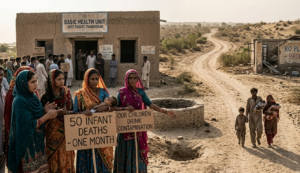
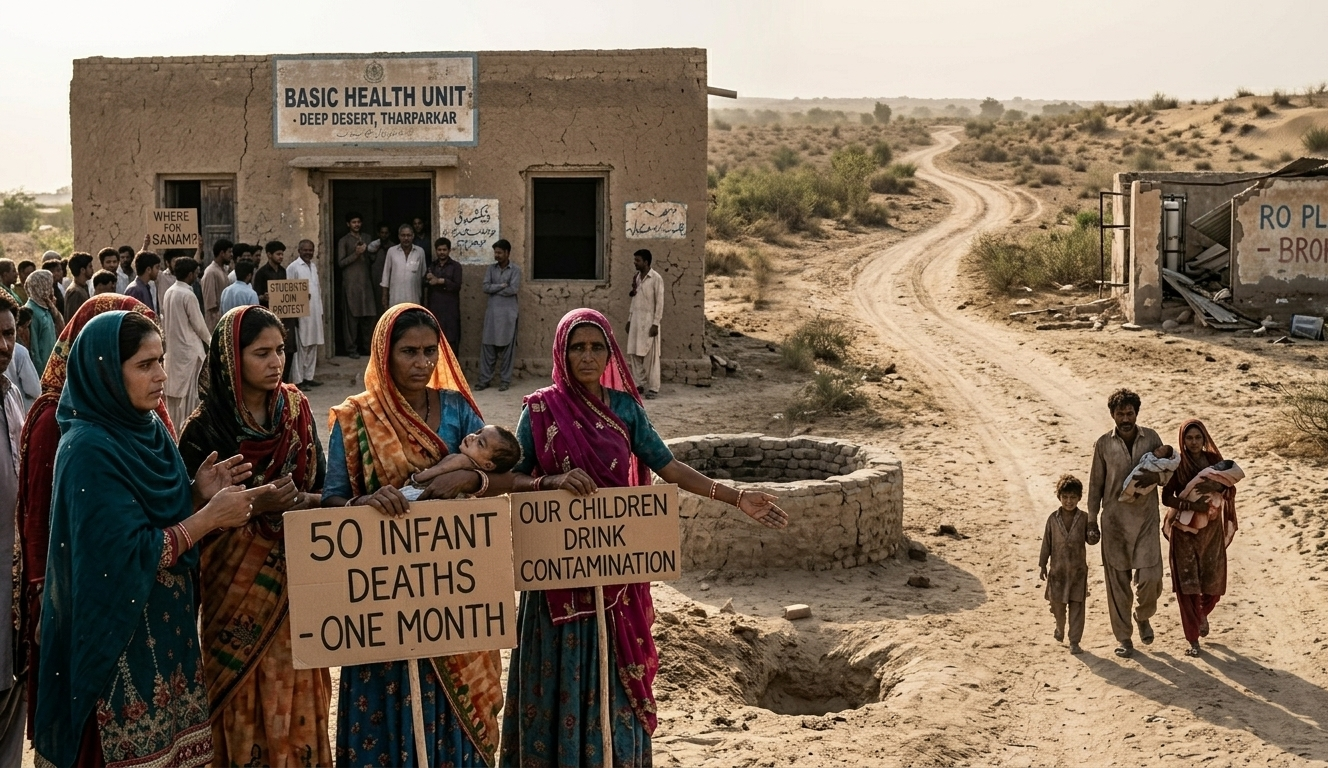
Tharparkar is once again the epicenter of a harrowing humanitarian crisis. Official reports and hospital data from the first quarter of 2026 indicate a catastrophic spike in infant mortality. In just one month, 50 children have lost their lives due to complications arising from acute malnutrition, water-borne diseases, and a lack of neonatal care.
The Reality at Civil Hospital Mithi: The statistics coming out of Civil Hospital Mithi are particularly alarming. The facility has recorded a mortality rate where, on average, six children die every five days. Most of these victims are from the most vulnerable segments of the Hindu-majority population living in remote desert areas. Parents often travel dozens of miles on foot or in makeshift transport, only to arrive at clinics that are understaffed and lack basic life-saving medicines.
Root Causes and Systemic Neglect: This recurring tragedy is fueled by a “triple threat”:
-
Extreme Malnutrition: Chronic food insecurity among pregnant mothers leading to low birth weights.
-
Water Scarcity: Reliance on contaminated wells which leads to fatal cases of diarrhea and pneumonia.
-
Infrastructure Decay: Many Basic Health Units (BHUs) in Tharparkar remain functional on paper only, lacking doctors and electricity.
The Hindu Sindh Foundation calls upon the Government of Sindh and international aid agencies to declare a Health Emergency in the district and establish mobile health units to reach the deep desert regions before more lives are lost.
The Sindh Renaissance Perspective:-
For Sindh Renaissance, the deaths in Tharparkar are not just a tragedy—they are structural violence. We demand a development model that puts human life above politics. A revived Sindh means a Tharparkar where a child’s survival is guaranteed, and its vast natural resources are reinvested directly into the health and future of its people.