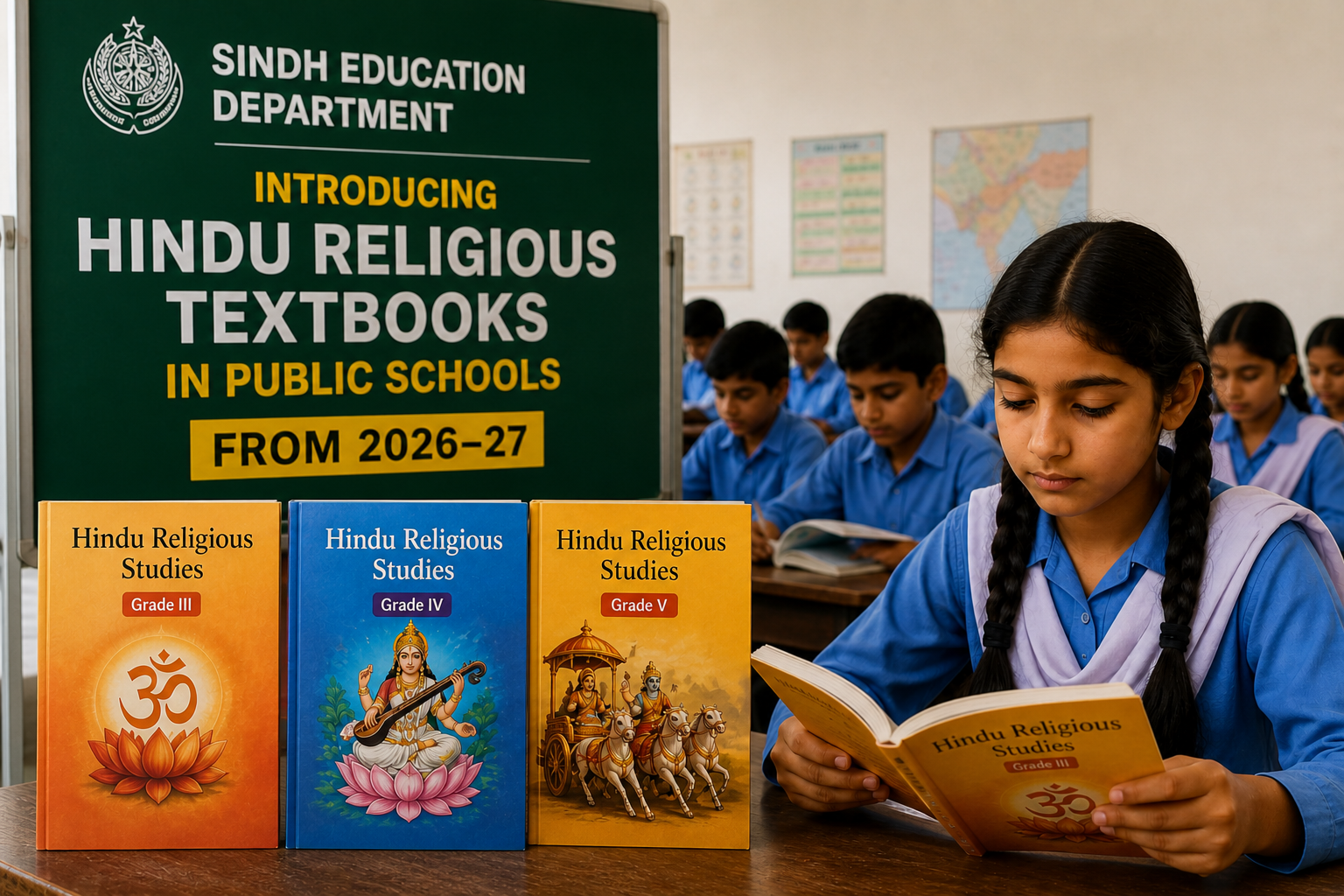
KARACHI: In a move aimed at promoting inclusive education, the Sindh Education and Literacy Department has approved the introduction of Hindu religious textbooks for students enrolled in public schools across the province.
The decision was taken during a meeting of the Executive Committee of the Sindh Curriculum Council on April 20, 2026, under the directives of Sindh Education Minister Syed Sardar Ali Shah. Officials confirmed that the new curriculum will be implemented from the academic year 2026–27.
Three Textbooks for Primary Classes
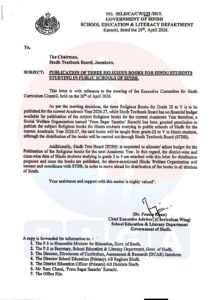
According to an official letter issued on April 29, the department has proposed the inclusion of three religious textbooks for students in Grades III to V. The letter, addressed to the chairman of the Sindh Textbook Board, outlines the framework for distribution and future funding.
Dr Fauzia Khan, Chief Executive Advisor to the department, stated that the textbooks will initially be published with financial support from Prem Sagar Sanstha Karachi, a local Hindu welfare organisation. The Sindh Textbook Board will oversee their distribution in government schools.
She further noted that the board has been requested to allocate funds for the publication of these books in subsequent academic years to ensure continuity of the initiative.
Over 129,000 Hindu Students to Benefit
Officials estimate that more than 129,000 Hindu students are currently enrolled in government schools across Sindh. The highest concentrations are reported in districts such as Tharparkar, with 26,642 students, and Umerkot, with 21,584 students.
The new textbooks will be distributed specifically to these students, enabling them to receive religious education aligned with their faith within the formal school system.
Push for Inclusive Curriculum
Education authorities emphasized that the initiative reflects broader efforts to create a more inclusive and equitable curriculum for minority communities in Sindh. The move is expected to address long-standing concerns about the lack of representation of minority religions in educational materials.
A similar step was taken at the federal level in 2023, when the National Curriculum Council granted no-objection certificates (NOCs) for the publication of religious textbooks for minority groups, including Hinduism, Christianity, Sikhism, Baha’i faith, Zoroastrianism, Kalasha, and Buddhism.
Concerns Over Representation Persist
Despite such initiatives, experts note that challenges remain. A study by the Centre for Social Justice highlighted a persistent lack of religiously inclusive content in textbooks across various boards in Pakistan. The report suggested that limited representation may contribute to social intolerance toward religious and sectarian minorities.
Education officials in Sindh expressed hope that the introduction of Hindu religious textbooks will serve as a step toward addressing these gaps, fostering greater understanding and inclusion within the education system.
For more updates and detailed coverage of this case and other issues affecting the Hindu and Sindhi communities in Sindh, Pakistan, stay tuned to Sindh Renaissance.