The forced conversion of innocent minor children in a sacred place like a school, separating them from their families and influencing them during moments of emotional vulnerability, is a cruel, unjust and deeply inhuman act. Children, regardless of religion, nationality or community, deserve love, protection, freedom and the security of their families above all else.
Every society must ask itself an important question: if such treatment were inflicted upon one’s own child, how would that family survive the pain and trauma? Justice cannot belong only to the majority; it must protect every citizen equally, especially vulnerable minorities who often suffer in silence.
Incidents involving the exploitation of children’s emotional weakness in the name of religion not only violate human dignity but also damage social harmony. A child’s temporary anger, confusion or emotional distress should never become an opportunity for coercion or religious manipulation. Such actions are against the principles of humanity, morality and tolerance.
History reminds us that these tensions are not new. During the era of the Mirs in Sindh, a Hindu boy who had become upset with his family reportedly sat near the wall of a mosque. Some clerics converted him to Islam after making him recite the Kalma. The incident intensified disputes between Seth Naomal Hotchand Bhojwani and the Mirs, eventually contributing to unrest and communal tensions whose scars are remembered even today.
Many observers now fear that similar attitudes are reappearing in a modern form.
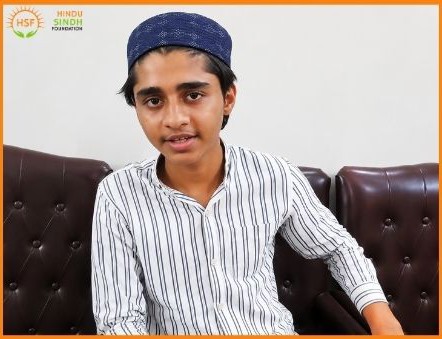
Recently, reports emerged regarding an innocent child, Harjit Kumar, who had gone to school upset with his family and shared his feelings with a teacher. Critics allege that instead of understanding the child’s emotional state and offering guidance or protection, he was pressured into reciting the Kalma and converting to Islam.
Whether any conversion occurs through fear, emotional manipulation or psychological pressure, such practices undermine trust within society and create divisions between communities. They fuel hatred, insecurity and fear among minorities who already struggle for equal protection and representation.
Sindh has historically been known as a land of Sufi traditions, shared culture, coexistence and mutual respect among people of different faiths. The province’s identity has long been built on tolerance, humanity and peaceful coexistence. Any ideology or action that weakens these values threatens the very soul of Sindh.
Human rights advocates and civil society members continue to stress that schools and educational institutions must remain safe spaces for children — places of learning, compassion and protection, not centers of religious coercion or ideological pressure.
Ending oppression, fear and injustice against minorities is not merely a political issue; it is a moral responsibility. True justice is measured by how a society protects its weakest and most vulnerable citizens, especially its children.
For more updates and detailed coverage of this case and other issues affecting the Hindu and Sindhi communities in Sindh, Pakistan, stay tuned to Sindh Renaissance.