Police register FIR as parents challenge marriage certificate reportedly listing their missing daughter as 20; rights advocates call for urgent investigation and legal assistance.
PHOOLNAGAR, PUNJAB🇵🇰
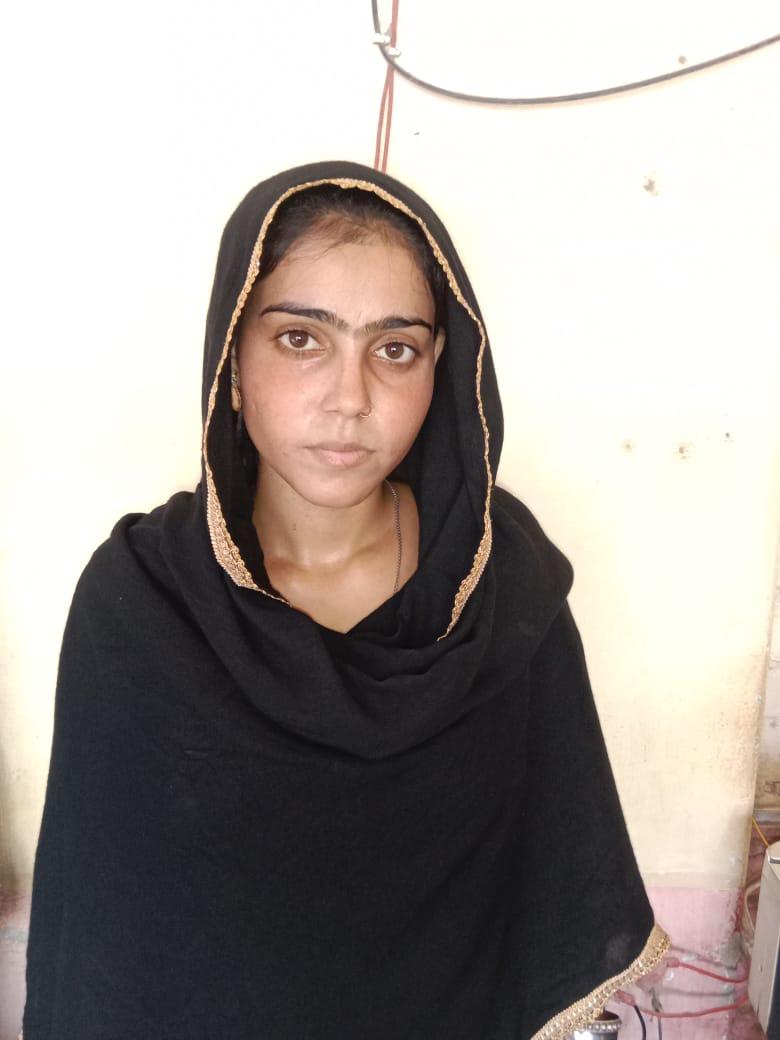
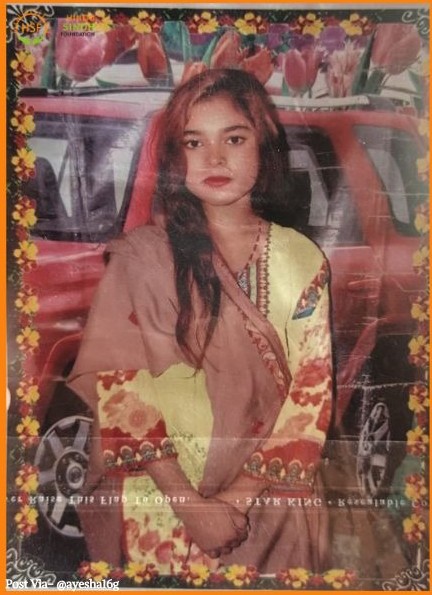
A 16-year-old Christian girl from Punjab’s Phoolnagar area remains at the centre of a distressing case involving allegations of abduction, forced religious conversion and child marriage. Her parents say their daughter, Samina Allah Ditta, disappeared while buying milk on 2 October 2026 and has not returned home.
The family alleges that Samina was taken away by a man identified as Muni and his associates, Amir and Zahoor. They further claim that she was subsequently taken to Jhang, converted to Islam against her will and married, with a marriage certificate reportedly recording her age as 20.
Her parents insist that she was only 16 at the time of her disappearance and are demanding her safe recovery and an independent investigation into the circumstances surrounding the alleged marriage.
The case has also exposed the difficulties faced by economically disadvantaged families seeking justice, particularly when they lack the financial resources and official documentation needed to challenge disputed marriage and identity records.
Disappearance While Buying Milk
According to an account published by the British Asian Christian Association (BACA), Samina disappeared between approximately 4:30 pm and 5:00 pm on 2 October.
Her mother, Zarina Bibi, had reportedly sent her to a nearby shop to purchase milk. When Samina failed to return, her mother contacted her husband, Allah Ditta, who was working in the fields near their brick-kiln community.
Her father immediately began searching for his daughter. The family says witnesses informed him that they had seen Muni and two associates taking Samina away in a white van.
Allah Ditta subsequently approached Ghulam Nabi, a brick-kiln supervisor reportedly associated with the area where Muni lived and worked.
According to the father’s account, the supervisor discouraged him from contacting the police, allegedly threatened him and repeatedly assured him that Samina would be returned.
Trusting those assurances, the father says he initially waited for his daughter to come home.
However, the situation took a different turn when he reportedly received a marriage certificate instead.
Marriage Certificate Raises Serious Questions About Her Age
On 14 October, Allah Ditta allegedly received a marriage certificate delivered to his home by the brick-kiln supervisor.
The document reportedly identified Samina as Muni’s wife and listed her age as 20.
Her parents strongly dispute that information, maintaining that their daughter was only 16.
They believe her age was deliberately misrepresented to facilitate the marriage and challenge the family’s ability to seek legal protection.
The family faces an additional obstacle: according to BACA’s account, Samina did not have an available birth certificate or national identity card that could immediately establish her age.
Nevertheless, the absence of these documents should not prevent authorities from investigating her age through available school, family, medical and other relevant records.
The marriage certificate must also be independently examined, including the identity of the person who prepared it, the information supplied, the witnesses involved and the circumstances in which the marriage was registered.
Police Register FIR Against Three Suspects
According to the BACA report published on 14 November, Allah Ditta approached City Phoolnagar Police Station on 14 October.
The organisation reports that police registered First Information Report (FIR) No. 898/26 against Muni and his alleged associates Amir and Zahoor under Section 376 of the Pakistan Penal Code.
However, the family’s account indicates that the registration of the FIR has not resulted in Samina’s return.
At the time of the latest published report, her parents were still seeking information about her whereabouts and welfare.
The FIR’s registration is an important procedural development, but it should not be confused with proof of the allegations or confirmation that the investigation has secured her safety.
Police must establish where Samina is, determine whether she is safe and independently investigate the allegations concerning her disappearance, alleged sexual violence, conversion and marriage.
The accused persons must also be given the opportunity to respond through the proper legal process.
BACA Visits Family and Offers Legal Assistance
The British Asian Christian Association says its representatives visited Samina’s family on 20 October 2026 at the brick-kiln community in GP Sarfraz Nagar.
During the visit, the organisation spoke with her parents and assessed their circumstances and need for legal assistance.
BACA subsequently announced that it would support the family in seeking legal representation and pursuing action to establish Samina’s whereabouts and challenge the disputed marriage arrangements.
Its fundraising appeal seeks financial assistance to cover legal representation, court-related travel and other expenses associated with the case.
The organisation’s 14 November report describes the family’s struggle as particularly difficult because of longstanding poverty and debt.
According to the report, Allah Ditta has worked in brickmaking for much of his life. He says his family has experienced debt and bonded-labour conditions across three generations.
The family reportedly owes approximately Rs.700,000 to the brick-kiln owner, a debt that has further restricted its ability to pursue an expensive legal battle.
For parents already struggling to meet their children’s basic needs, obtaining legal assistance can become another seemingly impossible challenge.
Pakistan’s Child Marriage Laws and the Need for Investigation
Samina’s case raises important questions about the protection of minors under Pakistan’s legal framework.
Punjab introduced the Punjab Child Marriage Restraint Ordinance 2026, establishing 18 as the minimum marriage age for both men and women.
The United States Commission on International Religious Freedom (USCIRF), in its October 2026 country brief on Pakistan, also identifies the minimum marriage age of 18 under Punjab’s 2026 child-marriage legislation.
The legislation is particularly relevant to cases in which the age of a girl is disputed or allegedly misrepresented in marriage documentation.
However, establishing Samina’s actual age remains essential. Authorities should examine all available evidence rather than relying exclusively on the age recorded in a marriage certificate.
There is also an important distinction between the legal issues involved: allegations of abduction, child marriage, sexual violence and forced religious conversion may require investigation under different legal provisions.
The family should have access to effective legal assistance to ensure that every relevant allegation is properly examined.
A Wider Concern for Religious Minority Girls
Samina’s disappearance comes amid continuing concerns about alleged abductions, forced conversions and marriages involving girls from religious minority communities in Pakistan.
A country information report published by the UK Home Office in July 2026 and updated on 25 September documents reports of forced conversion and marriage involving Christian and other minority women and girls, particularly in Punjab and Sindh.
The report notes that some documented cases involve minors and that families have faced difficulties obtaining effective police investigations.
Similarly, USCIRF’s October 2026 Pakistan country brief highlights continuing concerns about forced conversion cases involving Christian, Hindu and Sikh girls.
The commission also describes cases in which disputed or allegedly falsified age documentation has complicated efforts to protect underage girls.
These broader concerns provide important context, but they do not independently establish the allegations in Samina’s particular case. Her circumstances must be assessed on their own evidence.
The Girl Must Be Heard Safely and Independently
One of the most important requirements in this case is ensuring that Samina has an opportunity to speak freely.
If authorities locate her, her statement should be recorded in a safe environment, away from anyone who could intimidate, influence or pressure her.
Her age, personal circumstances, wishes and safety must be independently assessed.
A marriage certificate or a declaration of religious conversion cannot, by itself, establish that a minor freely consented to every aspect of what allegedly happened.
Authorities should also investigate whether threats, deception, coercion or other unlawful conduct were involved.
Her protection must remain the priority, regardless of the religious identities of the people involved.
A Mother’s Appeal: “I Want My Daughter Back”
For Zarina Bibi, the legal arguments and official documents cannot replace the daughter she says disappeared while carrying out an ordinary household errand.
Speaking to BACA, she questioned how her 16-year-old daughter could have entered into a marriage and expressed her desperation to have her child returned.
Her plea was simple:
“I want my daughter back.”
Her husband has also appealed for assistance, saying he cannot afford the legal expenses necessary to challenge the reported marriage and pursue his daughter’s recovery.
The family’s financial circumstances highlight another serious concern: access to justice should not depend on whether parents can afford lawyers, court travel and prolonged legal proceedings.
Authorities Must Establish the Facts
The allegations surrounding Samina Allah Ditta require an urgent, impartial and transparent investigation.
Police should establish her current whereabouts, verify her age, examine the marriage documentation, investigate the alleged role of the named individuals and determine whether any criminal offences have occurred.
The family should receive meaningful updates about the investigation and access to appropriate legal support.
Equally important, Samina’s rights and personal safety must remain central to every official decision.
The allegations have not yet been established through an independent investigation or judicial finding. Those accused must be treated in accordance with due process, and the girl’s own account must be heard without intimidation or outside pressure.
But uncertainty is not an excuse for inaction.
A 16-year-old girl is at the centre of a family’s desperate search for answers. Her safety cannot be reduced to a dispute over paperwork, religious identity or financial circumstances.
The immediate responsibility of the authorities is clear: find Samina, establish the truth and ensure that the law protects her.