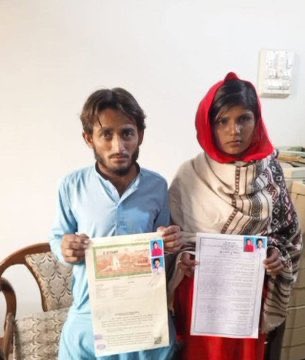
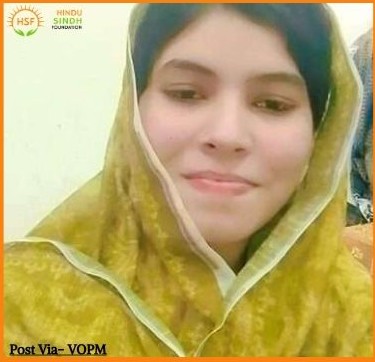
BUREWALA, Punjab🇵🇰 In a quiet farming village in Punjab, a Christian family says their lives have been shattered by the disappearance of their teenage daughter, a suspected forced conversion and marriage, and what they describe as a justice system that abandoned them when they needed help the most.
For weeks, Liaqat Masih has searched for answers.
His 16-year-old daughter, Jia Liaqat, disappeared from the family’s home in Chak No. 505/WB, near Burewala, on April 3 while her parents were working in nearby fields.
“We came home, and she was gone,” Masih said, struggling to hold back emotion. “Since that moment, our lives have not been the same.”
Masih and his wife, daily wage laborers raising seven children, immediately reported the disappearance to police and filed a First Information Report (FIR), hoping authorities would move quickly to locate the teenager.
But according to the family, days passed without significant progress.
Their fear intensified on April 8, when they received a WhatsApp call from a man identifying himself as Sohail Riaz. During the call, the man allegedly claimed Jia was with him and warned the family not to continue pursuing the case.
“He told us to stay quiet,” Masih said. “As a father, hearing something like that destroys you.”
The family says they shared the phone number and details of the call with investigators, but no immediate action followed. They later learned that Riaz was reportedly living in Dubai and that relatives in Pakistan had allegedly acted on his instructions.
The case took another dramatic turn when police informed the family that Jia had converted to Islam and entered into an online marriage with Riaz on April 15.
Masih rejects the claim that his daughter acted independently.
“She is a child,” he said. “A minor cannot make such decisions freely. We believe she was manipulated and pressured.”
The family believes Jia may have been groomed online through social media before her disappearance. Rights advocates assisting the family say the allegations raise concerns about coercion, exploitation of minors, and procedural failures by authorities.
Instead of reassurance, the family says they encountered intimidation and indifference after criticizing police handling of the case.
“One day they told me to travel for a police raid, but no one showed up,” Masih alleged. “Then they sent me somewhere else. It felt like we were being deliberately exhausted.”
On May 4, the family says they suffered another devastating shock when they learned Jia had appeared before a magistrate and reportedly declared that she was an adult, had willingly converted to Islam, and had married by choice.
Her parents say they were neither informed about the hearing nor allowed to be present.
“It broke us completely,” Masih said quietly. “We were denied even the chance to stand beside our daughter.”
Following the court proceedings, police reportedly released two suspects who had previously been detained in connection with the case.
The family now fears the investigation could effectively disappear.
“We don’t know where she is,” Masih said. “We don’t know if she is safe. Every day feels like torture.”
Human rights activist Albert Patras, who is supporting the family, says the case highlights serious legal concerns surrounding underage marriage and religious conversion cases involving minority girls in Pakistan.
“A minor cannot legally marry under the law,” Patras said. “There are procedures that must be followed, including proper age verification and ensuring that any statement is given without pressure. Those safeguards appear deeply questionable in this case.”
Patras also criticized what he described as police inaction and alleged attempts to discourage the family from pursuing legal remedies.
“The law exists on paper,” he said. “But laws mean little if vulnerable families cannot access justice.”
Punjab recently increased the legal age for marriage to 18 and introduced tougher penalties against child marriage. However, rights groups say enforcement remains inconsistent, particularly in cases involving poor and religious minority families.
Legal experts note that courts in Pakistan have increasingly scrutinized disputed age documents in forced conversion and marriage cases, acknowledging the possibility of manipulated records. Yet controversial rulings continue to fuel concern among activists and minority communities.
For Liaqat Masih, the legal arguments and courtroom debates feel painfully distant from the reality inside his home.
“We are poor people,” he said. “We belong to a minority community. Sometimes it feels like our voices do not matter.”
Still, the family says it will continue fighting.
With support from legal advocates, they plan to challenge the magistrate’s ruling before the high court in hopes of reopening the case and securing Jia’s recovery.
Until then, their house remains suspended between hope and grief- a mother’s unanswered prayers, siblings waiting for a sister’s return, and a father refusing to stop searching for his child.
For more updates and detailed coverage of this case and other issues affecting the Minor communities in Pakistan,