Geneva | UN Human Rights Council- 61st Session
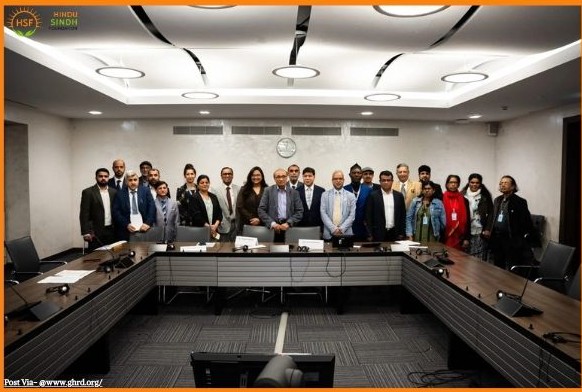
Speakers at a side event during the 61st Session of the United Nations Human Rights Council (UNHRC) called for greater international attention to what they described as a worsening human rights situation affecting indigenous peoples and religious minorities in Pakistan’s Sindh and Balochistan provinces.
The event brought together Professor Nicolas Levrat, the UN Special Rapporteur on Minority Issues, alongside representatives of the World Sindhi Congress (WSC) and the Unrepresented Nations and Peoples Organization (UNPO). Participants alleged that indigenous communities and religious minorities are facing structural discrimination, economic marginalization, enforced disappearances, and restrictions on their fundamental rights.
Concerns Over Regional Religious Discrimination
Opening the discussion, Professor Nicolas Levrat spoke about what he described as a broader regional pattern of discrimination against minority communities across Asia. He argued that legal and administrative barriers often prevent minority groups from organizing independently or freely practicing their religion.
Levrat also noted what he called a “mirror situation” in the region, where communities that constitute majorities in one country may become vulnerable minorities across neighboring borders. He stressed that insufficient regional cooperation has left many minority groups without effective protection, despite the principles outlined in the 1992 UN Declaration on the Rights of Persons Belonging to National or Ethnic, Religious and Linguistic Minorities.
Representing UNPO, Mercè Monje Cano stated that many affected communities continue to experience uncertainty and insecurity, urging governments and international institutions to strengthen protections for minority populations.
Allegations of Forced Conversions and Child Marriages
During the session, Fiza Kalhoro of the World Sindhi Congress highlighted concerns regarding Pakistan’s Hindu minority, particularly in Sindh.
According to figures presented during the event, between 700 and 1,000 Hindu and Christian girls are allegedly subjected to forced religious conversion and marriage every year. Kalhoro claimed that 70–80 percent of the reported victims are Sindhi Hindu girls, many of them minors.
She further alleged that legal safeguards remain inadequate, with victims often denied meaningful legal representation during court proceedings. The resulting insecurity, she said, has contributed to increased migration among minority families seeking safety.
Economic Inequality and Resource Distribution
World Sindhi Congress Chairman Dr. Lakhu Bhawanani and Dr. Hidayat Bhutto argued that despite Sindh’s significant contribution to Pakistan’s economy, local communities continue to experience widespread poverty.
According to data presented at the event, Sindh contributes approximately 70 percent of Pakistan’s national revenue, while producing 72 percent of the country’s natural gas and 54 percent of its oil.
Despite these resources, the speakers alleged that nearly 70 percent of Sindh’s population experiences multidimensional poverty.
They also highlighted environmental and humanitarian concerns, claiming that 80 percent of available drinking water in Sindh is unsafe for human consumption and that approximately 8 million children remain out of school.
The speakers further criticized what they described as an expanding military presence, arguing that military-controlled housing schemes and cantonments occupy extensive areas of land in Karachi that could otherwise benefit local communities.
Enforced Disappearances and Political Restrictions
Representatives from Sindhi and Baloch organizations also raised concerns regarding enforced disappearances and restrictions on political expression.
Naseem Baloch and Dr. Hidayat Bhutto alleged that numerous political activists remain missing, including Ayub Ghandro and Saifullah Zardari. They further claimed that peaceful gatherings and commemorative events have been disrupted through arrests and roadblocks.
The speakers argued that such measures reflect broader restrictions on civil liberties and political participation in both Sindh and Balochistan.
Calls for International Action
At the conclusion of the session, participants urged the United Nations and the wider international community to increase scrutiny of Pakistan’s human rights record.
Among their recommendations were:
- Independent investigations into allegations of enforced disappearances.
- Greater accountability regarding reported cases of forced conversion and marriage involving minority women and children.
- Protection of judicial independence and fundamental civil rights.
- Stronger international engagement on issues affecting indigenous peoples and religious minorities.
- Recognition of the political and human rights concerns raised by Sindhi and Baloch representatives as part of broader regional peace efforts.
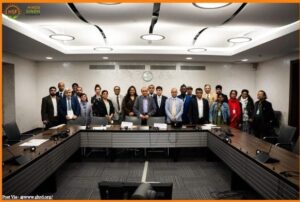
The side event formed part of ongoing discussions during the 61st Session of the UN Human Rights Council in Geneva, where civil society organizations and UN experts continue to examine minority rights, religious freedom, and indigenous peoples’ protections worldwide.