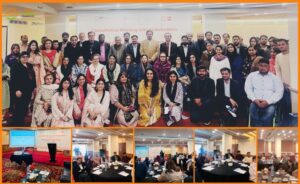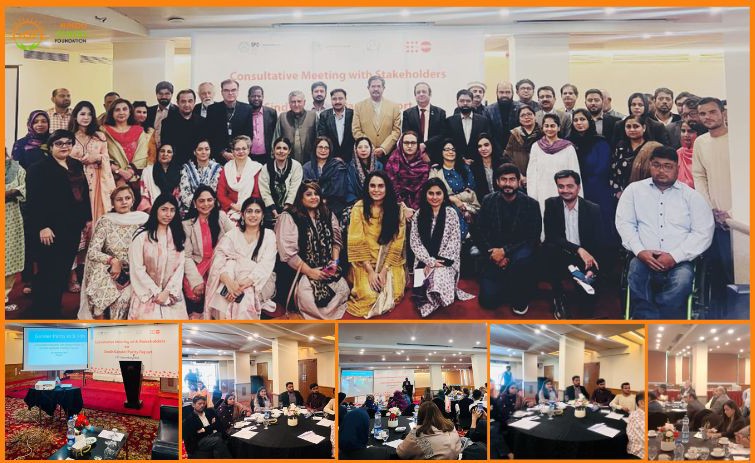
Karachi: A provincial consultation on the Draft Sindh Gender Parity Reports (SGPR) was held in Karachi, bringing together representatives of civil society, non-profit organizations, and development professionals to deliberate on key gender-related challenges and policy priorities in Sindh. The consultation was jointly organized by SPO (Strengthening Participatory Organization) in collaboration with UNFPA, the United Nations Sexual and Reproductive Health Agency.
Among the participants were Sumaira Khurram and Sunil Kumar, Coordinator of the Hindu Sindh Foundation, who represented their organization in discussions focused on the Sindh Gender Parity Agenda. The consultation placed special emphasis on education, women’s rights, and the broader framework of gender equality within provincial policy-making.
The event served as a platform for feminist practitioners, social sector researchers, development professionals, and university lecturers to exchange insights on the intersections of gender with poverty, public health, violence, governance, and public policy. Participants highlighted the need for evidence-based approaches to address systemic inequalities and to ensure that gender-responsive policies are effectively implemented across sectors.
Speakers at the consultation shared experiences of working with governments and human rights organizations at both local and global levels, noting that women’s rights organizations in Pakistan have played a crucial role in advocacy and policy reform for nearly two decades. The discussions also underscored the importance of organizing, advocating, and campaigning alongside diverse national, regional, and global feminist collectives and civil society networks to promote inclusion and rights-based development.
During the consultative session, the Hindu Sindh Foundation team shared key recommendations, emphasizing the importance of integrating gender parity considerations into education policies and development planning, particularly for women and marginalized communities. They further recommended strengthening collaboration among civil society organizations, government departments, and international partners to support sustainable and inclusive gender equality initiatives.
The consultation concluded with collective inputs and recommendations aimed at strengthening advocacy efforts and ensuring that the Sindh Gender Parity Reports contribute meaningfully to inclusive, equitable, and sustainable development outcomes across the province.