Prahladpuri Temple (Urdu: پرَہْلادْپُورِی مندر) was one of the most historically significant Hindu temples in Multan, a city in the Punjab province of what is now Pakistan. Situated inside the historic Multan Fort, adjacent to the famed Shrine of Bahauddin Zakariya, this ancient temple stood as a symbol of South Asian religious heritage, legendary lore, and cultural syncretism for centuries before its tragic decline in the late 20th century.
🌺 Origins and Mythological Significance
According to local tradition and Hindu religious lore, the Prahladpuri Temple was named after Prahlada, a celebrated devotee in Hindu mythology who exemplified unwavering devotion to Lord Vishnu. The temple was dedicated to Narasimha, the lion-man avatar of Vishnu, who appeared to save Prahlada from his tyrant father, King Hiranyakashipu, and to uphold dharma (righteousness).
Multan itself was historically known in ancient sources as Kashyapapura, believed to be founded by the sage Kashyapa and later ruled by his descendants, including Hiranyakashipu. The temple tradition asserts that Narasimha manifested from a pillar within the court, an act that inspired the festival of Holika Dahan — the precursor to the modern Holi festival of colours — and led devotees to build a temple around this sacred spot.
🏛️ Historical Evolution Through the Ages
🕉️ Pre-Colonial and Medieval Periods
The exact age of the original temple is shrouded in mystery, with some oral accounts and historical narratives indicating that older sanctuaries occupied the site long before the present structure was recorded. Over the centuries, the temple underwent cycles of destruction and reconstruction, reflecting the broader cultural shifts in the region.
Some local legends describe an earlier temple with golden columns and roof, later dismantled and repurposed as a mosque by Sher Shah Suri in the 16th century, though the historical accuracy of this account is debated among scholars.
🇬🇧 Colonial Era
During British rule, European travellers noted the Prahladpuri Temple as a principal site of Hindu devotion in Multan, distinguished by its raised platform and architectural features, including a main hall with skylights and circumambulatory passages.
🛕 Architecture
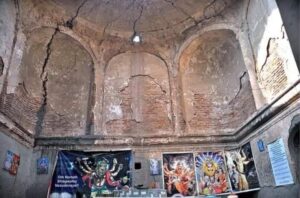
Before its destruction, the temple stood atop a raised platform (mandapa) inside Multan Fort. Its interior once housed a central hall and walkways illuminated by skylights, culminating in a shrine that contained a revered image of Narasimha. A dharamshala (pilgrim rest house) once stood beside the temple, reflecting its role not only as a sacred site but also as a center of community and cultural life.
🪔 Post-Partition Decline
After the Partition of India in 1947, most Hindus in Multan migrated to India, ushering a period of neglect for many Hindu sites left behind. Management of the temple passed to the Evacuee Trust Property Board (ETPB), the Pakistani government body responsible for properties left by migrants. As Hindu custodians dwindled, the structure fell into disuse and disrepair; a madrasa occupied parts of the temple grounds during the 1980s.
⚠️ Destruction in 1992
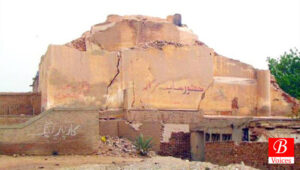
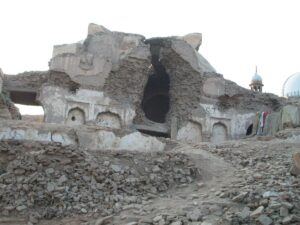
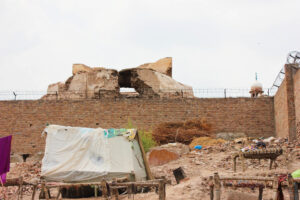
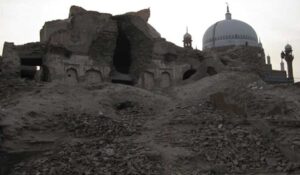
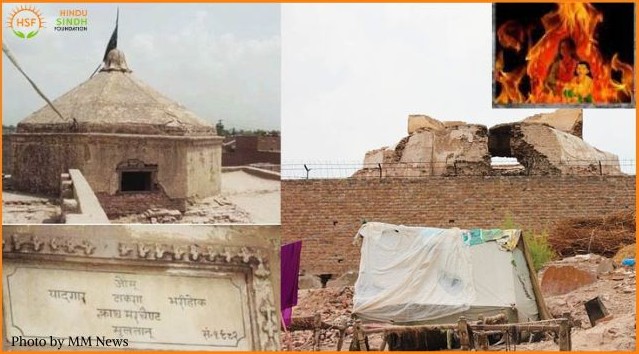
In December 1992, in the wake of the demolition of the Babri Masjid in Ayodhya (India), communal tensions surged across the subcontinent. In Multan, a Muslim mob attacked and destroyed the Prahladpuri Temple and its dharamshala, leaving the sacred site in ruins. The building remains largely dilapidated, with parts of the structure at risk of collapse and the site subjected to encroachment and debris accumulation.
🕊️ Heritage and Restoration Efforts
Despite its ruined condition, the historical and cultural significance of Prahladpuri Temple has not been forgotten.
-
Legal protection: The temple site is listed under heritage preservation laws in Punjab.
-
Peace and restoration initiatives: In the early 2020s, local peace committees — including religious scholars, civil society leaders, and authorities — pledged to support interfaith harmony and initiatives toward restoring the temple as a heritage site and symbol of inclusivity.
-
Supreme Court directives: Pakistan’s Supreme Court has urged state actions for restoring minority religious shrines, including Prahladpuri.
-
Pilgrimage and cultural memory: Although regular worship has ceased, for many in the global Hindu diaspora, Prahladpuri remains a place of deep symbolic connection — especially due to its associations with Holika Dahan and the Narasimha legend.
🕯️ Cultural Legacy
Prahladpuri Temple stands today as more than a ruin; it is a testament to:
-
Multan’s pluralistic past, where Hindu, Islamic, and Sufi traditions once coexisted in the same sacred precinct;
-
Mythological memory of Prahlada and Narasimha, which continues to influence Hindu devotional practices;
-
The evolution of Holi, one of South Asia’s most vibrant festivals; and
-
The challenges and hopes of heritage preservation in regions marked by complex historical narratives.
📌 Conclusion
The story of Prahladpuri Temple is one of devotion, diversity, destruction, and the enduring power of memory. While ground-level restoration remains a work in progress, the temple’s legacy endures in communal memory, scholarly discourse, and the continuing efforts of those who seek to preserve South Asia’s layered cultural heritage.