Mirpur Sakro, Sindh🇵🇰: A disturbing incident from Government Girls High School Mirpur Sakro has ignited outrage across Sindh after parents of Hindu students alleged that the school’s headmistress demanded the girls convert to Islam before being allowed to continue their education. According to protesting families, the headmistress reportedly told students:
“First become a Muslim, then you will be allowed to study. Until you convert to Islam, you have no right to come to school.”
While authorities have yet to publicly confirm the full details of the incident, the allegations have triggered widespread concern over the safety and rights of minority students in the region.
Families Protest: ‘Let Our Girls Study Without Fear’
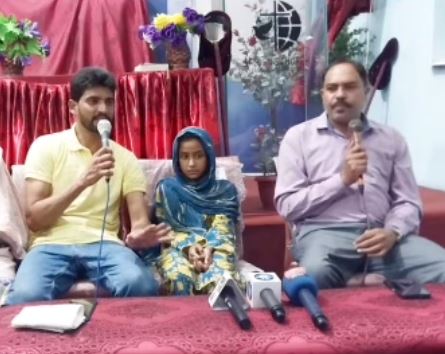
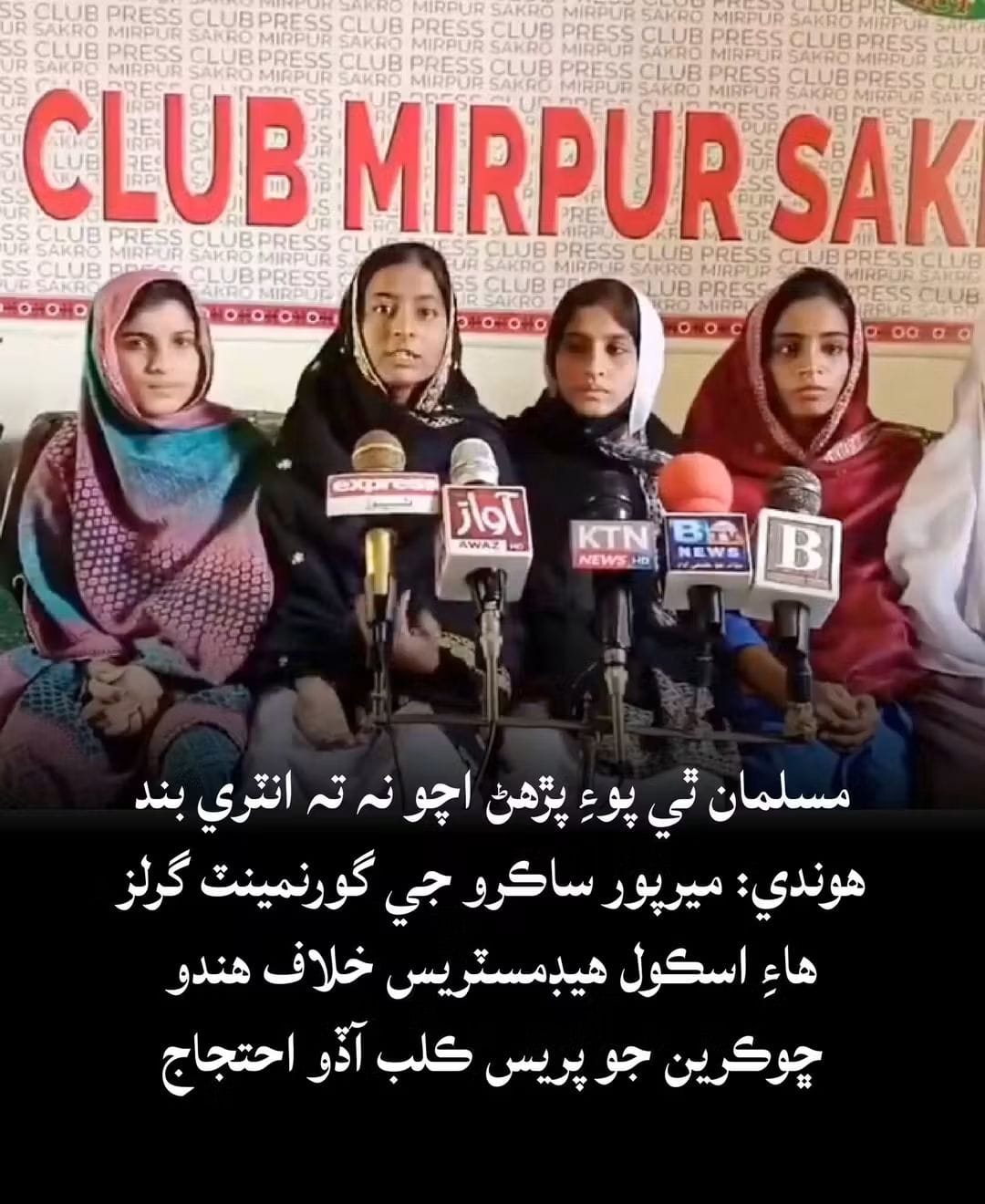
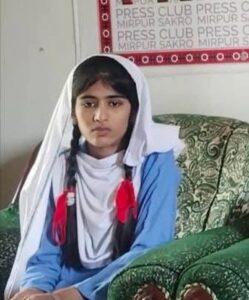
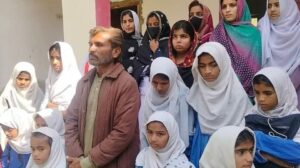
On the day following the alleged incident, dozens of Hindu girls and their parents gathered in front of the Sakro Press Club, staging an emotional protest. Holding placards and chanting slogans, they demanded action against what they described as blatant discrimination and coercion.
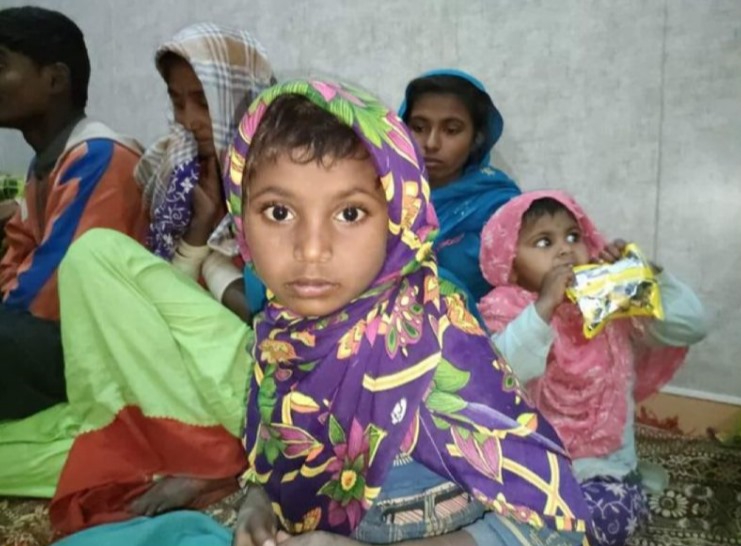
Parents reported that several Hindu girls were sent home after refusing to comply. “Our children are terrified,” one mother said. “We send them to school to learn- not to be pressured to abandon their faith.”
The community insists that the government intervene swiftly, fearing the incident may set a dangerous precedent if ignored.
From Education to Intimidation: A School’s Betrayal
Government Girls High School Mirpur Sakro was expected to be a place of equal opportunity. Instead, the allegations paint a grim picture: a public school turned into a space where vulnerable minority students face religious pressure rather than academic guidance.
Protesters argue that such actions- if verified- go beyond discrimination, amounting to religious coercion and psychological intimidation. Despite the seriousness of the claims, parents say no decisive action was taken until public pressure mounted.
An Incident in a Larger Pattern
Human rights activists say the Mirpur Sakro case reflects a long-standing issue faced by Hindu girls in parts of Pakistan. They point to recurring concerns, including:
-
Abduction and forced conversions
-
Pressures within educational institutions
-
Legal and social impunity for perpetrators
-
Lack of state protection despite repeated complaints
For affected families, each new incident is not isolated- it is another link in a chain of fear. “Our girls are not safe anywhere,” a protester said. “Not on the road, not at home, and now not even in school.”
Sindh’s Legacy of Tolerance Under Strain
Sindh has historically been regarded as a cradle of pluralism, where Muslims, Hindus, and other communities coexisted for centuries. But recent incidents—such as the Mirpur Sakro controversy- are seen by many as attacks on that history of harmony.
Community leaders warn that allowing any form of coercion in schools threatens not only minority families but Sindh’s very identity. “This is not the Sindh we grew up in,” one activist said. “This is not the Pakistan we were promised.”
Government Suspensions Raise New Questions
Following public uproar, the headmistress of the school was reportedly suspended. However, the move sparked additional controversy when the father of two of the affected Hindu students—Sanon Maheshwari, a government sanitary worker—was also suspended by the Town Committee Chairman, Iqbal Ahmed Khaskheli.
Local residents claim this action unfairly penalizes the family for raising their voice.
Intimidation of a Journalist: ‘Even Asking a Question Has Become a Crime’
The controversy deepened when journalist Mahesh Kumar, who questioned teacher Gulnaz about giving religious instruction despite being a biology teacher, was allegedly forced into an apology.
According to his statement to authorities, four armed men entered his home at night, threatened him at gunpoint, and ordered him to record a video apologizing for asking:
“You are a biology teacher… so why were you giving religious instruction to Hindu schoolgirls?”
He insists he asked no question disrespecting any religion. The teacher reportedly did not answer—but the retaliation came for the journalist instead.
The incident has raised alarm among media groups, who say intimidation of journalists is becoming increasingly common. “If anything happens to Mahesh Kumar,” activists warn, “the responsibility will lie with those who threatened him.”
A Call to Action
The protesting families and rights groups are calling for:
-
A transparent investigation into the Mirpur Sakro school incident
-
Legal action against anyone found involved in discrimination or coercion
-
Protection measures for Hindu girls in all educational institutions
-
Official condemnation of religious extremism within schools
-
Security and justice for journalist Mahesh Kumar
The case has become more than a local dispute—it is now a test of the government’s commitment to minority rights, constitutional protections, and the rule of law.
Conclusion: A Defining Moment for Sindh and Pakistan
The courage of the Hindu families who protested- and of journalist Mahesh Kumar- reflects a community fighting for dignity, safety, and equal rights. Their struggle has exposed deep vulnerabilities in Pakistan’s minority protections.
Sindh’s identity as a tolerant, pluralistic province is at stake.
Pakistan’s credibility as a democratic nation is at stake.
Most importantly, the future of its minority children is at stake.
The question now is simple:
Will the government stand with its Hindu citizens—or allow extremism to tighten its grip?
The time for inaction is over. The time to act is now.
#StopForcedConversions #EducationForAll #JusticeForHinduGirls #SindhAgainstExtremism #ProtectMinorityRights 💔📚✊
For more updates and detailed coverage of this case and other issues affecting the Hindu and Sindhi communities in Sindh, Pakistan, stay tuned to Sindh Renaissance.