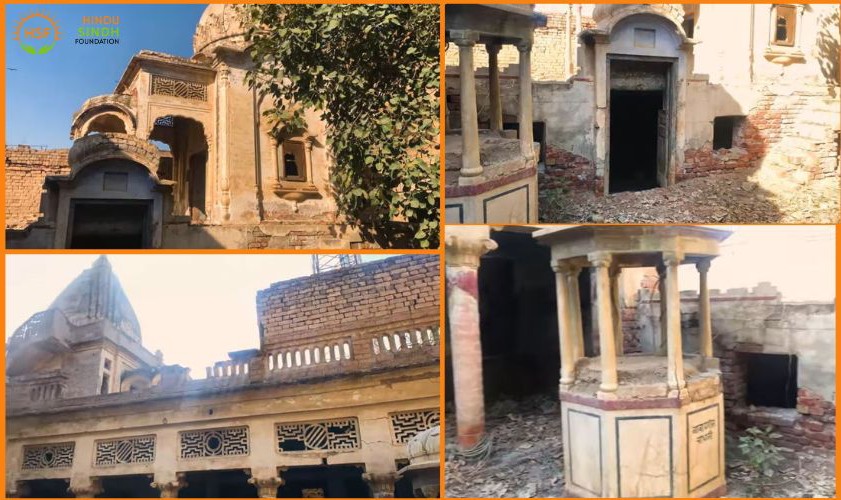
Kali Mandir in Dera Ismail Khan, located in Pakistan’s Khyber Pakhtunkhwa province, is one of the region’s few remaining relics of pre-Partition Hindu heritage. Historically, Hindu temples such as this stood as important places of worship and community gathering for local Hindu populations prior to 1947 and for some years thereafter.
Historical and Cultural Significance
The temple- often referred to locally as the Kali Bari Mandir- was dedicated to Goddess Kali, a prominent deity in Hinduism associated with strength, protection, and transformation. It served as a spiritual center for Hindus in Dera Ismail Khan and surrounding areas, where rituals and festivals would be observed with devotion and community participation.
According to historical accounts, this temple is one of the many heritage sites that reflect the diverse religious tapestry that existed in this region before and around the time of the 1947 Partition. Across Pakistan, dozens of such temples once dotted the landscape, serving vibrant Hindu communities.
Present Condition and Controversies
In recent decades, the Kali Mandir’s role as a place of worship has declined significantly. The temple is now not functioning as an active Hindu temple and has been repurposed for commercial use, reportedly as a hotel or similar establishment. Local Hindu activists and community representatives have raised concerns that the site- though historically sacred- has been leased out and is no longer preserved in its original religious capacity.
Critics argue that the leasing of such religious property- often through government entities responsible for evacuee properties- means that temples like Kali Mandir lose their cultural and spiritual identity. They contend that these sites could otherwise attract pilgrims and visitors interested in the region’s rich history.
Discussion on Heritage and Preservation
The situation at Kali Mandir highlights a broader challenge in Pakistan: many Hindu heritage sites are abandoned, repurposed, or poorly maintained. According to research on Hindu temples across the country, out of hundreds that existed before Partition, only a fraction remain under proper management, with many in varying states of neglect.
For the Hindu community, temples such as Kali Mandir are not just architectural structures but living links to ancestral faith and cultural memory. Efforts by activists aim to have these sites acknowledged, restored, and- where possible- returned to community management so they can continue to serve their original religious purpose.
A Reflection of Shared History
The story of Kali Mandir in Dera Ismail Khan stands as a testament to the region’s multicultural past and evolving present. Its existence- and the discussions surrounding its use- reflect both the historical diversity of the area and the contemporary debates on how best to preserve religious heritage in a changing world.