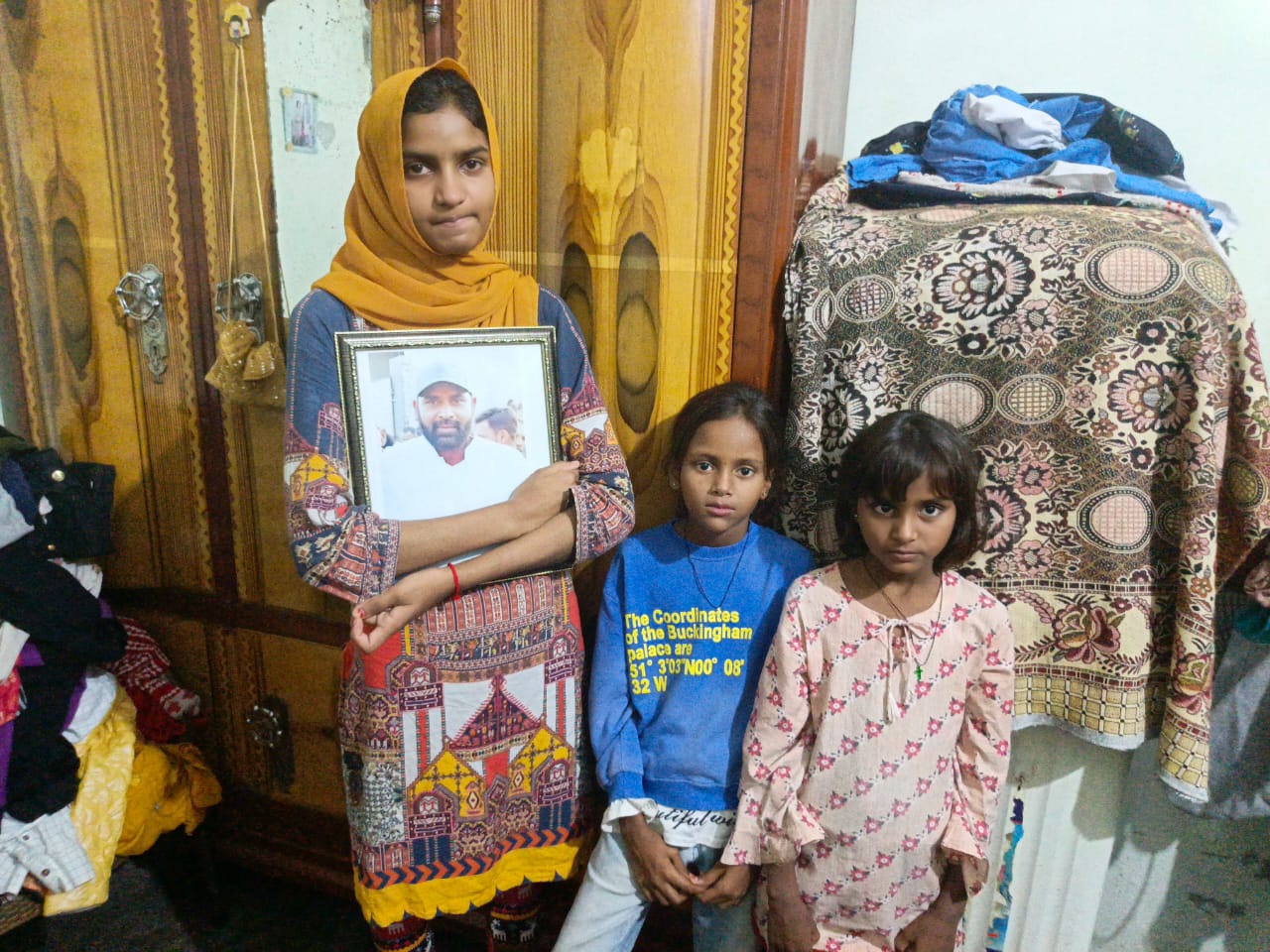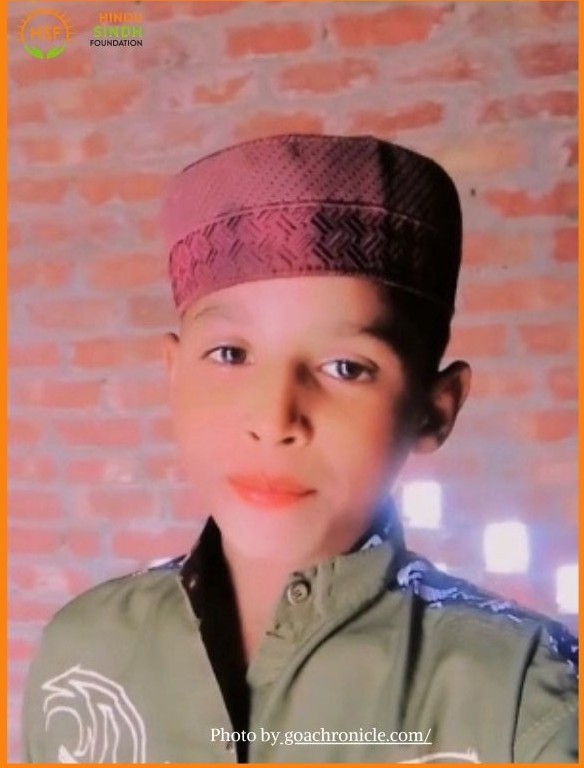
Sheikhupura, Punjab🇵🇰: Serious allegations have emerged from Kotla Sharif village in Sheikhupura District regarding the reported abduction and forced religious conversion of a 14-year-old Christian boy, Jameel Masih. The case has drawn attention from local rights advocates, who are calling for immediate legal action and stronger protections for minority children.
Background of the Case
According to the family, Jameel Masih is the son of Sharif Masih, a daily wage laborer and member of the New Apostolic Church in Pancho Baig Kotla village, Sheikhupura. Due to financial hardship, Sharif Masih reportedly sent his son to work at the cattle shed of a local landowner, Muhammad Boota Bajwa, approximately five years ago.
Instead of a fixed monthly wage, the arrangement allegedly included payment in kind: five maunds of wheat (approximately 200 kilograms) annually, valued at around PKR 16,000. The family claims they were permitted to visit Jameel once a month and occasionally bring him home overnight.
However, on February 22, when the parents went to see their son, they were allegedly denied access. According to Sharif Masih, the landowner claimed that Jameel did not wish to meet his parents. After local elders intervened, the boy was briefly handed over to his family.
The family alleges that shortly afterward, Muhammad Boota Bajwa returned with two armed men, physically assaulted them, and forcibly took Jameel back. Since then, they claim they have not been allowed to see or communicate with their son.
Alleged Conversion and Online Video
The family reports that they later discovered a TikTok video showing Jameel wearing an Islamic cap, accompanied by an Islamic hymn. Local residents reportedly informed them that the boy had converted to Islam.
These claims have not yet been independently verified by authorities. However, the case has raised serious concerns among minority rights advocates about possible coercion and illegal confinement.
Legal Action and Advocacy Response
With assistance from the Christian advocacy organization HARDS Pakistan, the family has filed a written complaint at Farooqabad Saddar Police Station seeking the boy’s recovery and the registration of a First Information Report (FIR).
Sohail Habil, Chief Executive of HARDS Pakistan, stated that if police fail to register the FIR, the organization intends to file a writ petition before the Lahore High Court to secure the minor’s recovery.
Rights activist Napolean Qayyum suggested that the alleged incident may be linked to bonded labor practices. Pakistan enacted the Bonded Labour System (Abolition) Act, 1992, which formally prohibits debt bondage. However, implementation remains inconsistent, particularly in rural agricultural areas where economically vulnerable families often rely on landlords.
Qayyum urged authorities to consider relevant sections of the Pakistan Penal Code concerning kidnapping, wrongful confinement, assault, criminal intimidation, and violations of child labor laws.
Broader Context: Forced Conversions in Pakistan
Allegations of forced conversions involving Christian and Hindu minors have surfaced repeatedly in Pakistan, particularly in Punjab and Sindh provinces. Rights organizations, including the Human Rights Commission of Pakistan (HRCP), have documented cases involving underage girls from minority communities who were reportedly abducted, converted, and married.
In 2021, Pakistan’s parliament declined to move forward with a bill seeking to criminalize forced religious conversions after opposition from religious political parties and the Council of Islamic Ideology.
Pakistan’s Constitution guarantees freedom of religion under Article 20, and existing criminal laws prohibit kidnapping, forced marriage, and bonded labor. However, rights groups argue that enforcement mechanisms are often weak.
Demographic and Social Context
According to Pakistan’s 2023 national census, Christians make up approximately 1.37 percent of the country’s population. The majority of Pakistan’s population- over 96 percent—is Muslim.
Minority communities, particularly Christians, are disproportionately represented among low-income labor sectors, including sanitation work and agricultural labor. Advocacy groups argue that economic vulnerability increases exposure to exploitation, including child labor and coercion.
International watchdog organization Open Doors ranks Pakistan among the countries where Christians face significant societal pressure and discrimination.
Calls for Accountability
The Masih family and supporting advocacy groups are urging law enforcement authorities to conduct a transparent investigation, ensure the safety of the minor, and uphold constitutional protections guaranteeing freedom of religion and protection from coercion.
The case raises broader questions about child protection mechanisms, minority rights enforcement, and accountability in rural areas where power imbalances between landowners and laborers remain significant.
As the legal process unfolds, rights advocates stress the importance of impartial investigation and adherence to due process to determine the facts and ensure justice under Pakistani law.
For more updates and detailed coverage of this case and other issues affecting the Minor communities in Pakistan,