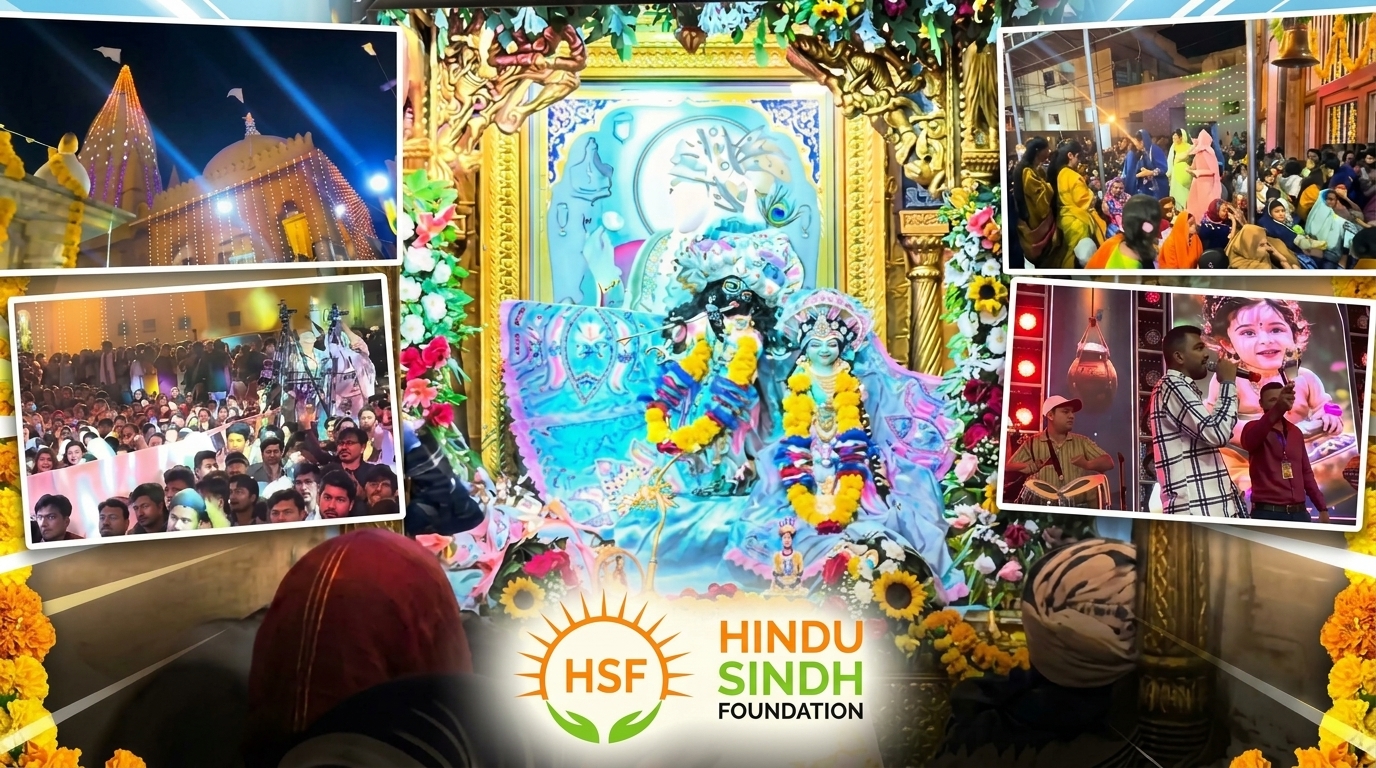
Nestled in the ancient city of Shikarpur (Sindh🇵🇰), the Budheshwar Mahadev Temple stands as one of the oldest surviving Hindu sacred sites in the region, offering a rare window into the rich religious and cultural tapestry of Upper Sindh. Once part of a constellation of temples and darbars that defined the city’s spiritual life, this temple- also known locally as Chatruram Waro Shivalo- reflects centuries of devotion, community patronage and shared heritage.
🕰️ Origins and Historical Context
Historians and oral traditions place the original establishment of the Budheshwar Mahadev Temple in the late 18th century or early 19th century, a period when Shikarpur served as a thriving hub of commerce and intercultural exchange.
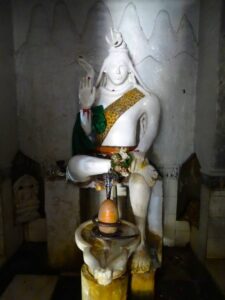
Originally a modest shivalo- a temple centred on Lord Shiva and the Shiva linga (symbol of Shiva)- the shrine gradually became an important place of worship for Hindus in the city’s Sukpul locality. Devotees from diverse local communities gathered here for religious festivals, rituals, and daily worship, making it a focal point of spiritual life.
🛠️ Expansion and Patronage
The temple’s growth over time was fuelled by the support of local patrons and traders. According to oral histories recorded from descendants of temple devotees, Rajaram Khatri, a prominent Shikarpur trader, initiated renovations and structural expansion. Later, Seth Khanchand Makhija, a well-known wool merchant with trade links spanning Sindh and Balochistan, played a key role in further enlarging the complex and establishing religious organizations such as Shri Geeta Sangat within its precincts.
Under this patronage, Budheshwar Mahadev evolved beyond a simple Shiva shrine: other Hindu deities and, over time, even scriptures such as the Guru Granth Sahib became part of its spiritual ambience, reflecting a degree of syncretism in worship practices.
🕉️ Architecture and Interior
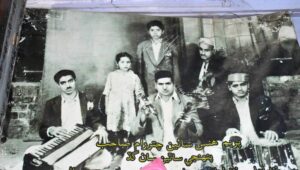
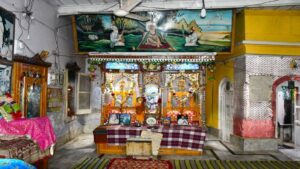
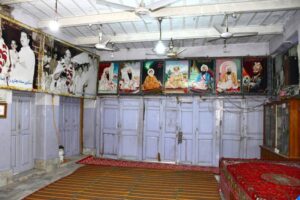
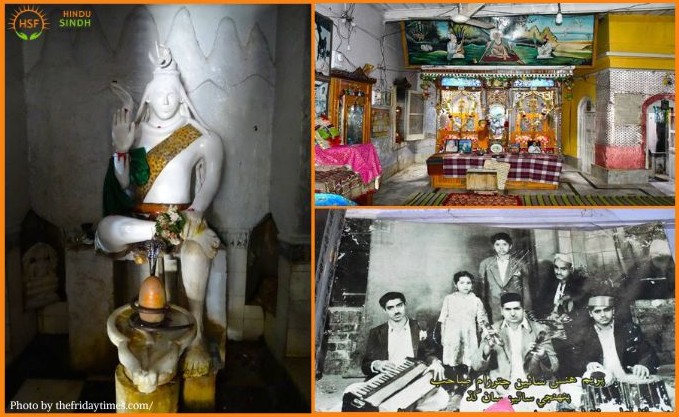
Though time and neglect have eroded much of its original grandeur, the temple’s layout and surviving elements still reflect traditional Hindu temple design. Inside the main satsang hall, remnants of carvings, images of Shiva and the Shiva linga, and woodwork recall the devotional ambience the site once held. The hall walls also bear faded paintings and portraits- including depictions of Hindu saints, Sikh gurus, and figures such as Sain Chatruram, who was once a key spiritual leader associated with the temple.
The nearby samadhi (shrine) of Sain Chatruram contains commemorative images of revered figures and is an enduring testament to a once-vibrant devotional community.
🎉 Rituals, Community, and Legacy
In its prime, Budheshwar Mahadev Temple was a centre for a range of religious and social activities:
-
Festivals and Celebrations: Annual and seasonal Hindu festivals drew worshippers from Shikarpur and surrounding towns.
-
Ceremonial Rites: Weddings, ritual observances, and devotional gatherings took place under its roof.
-
Performing Arts and Libraries: Historical accounts mention spaces where dramas, stories inspired by sacred texts, and dance performances were staged, and even a library once existed on the temple grounds.
This vibrant legacy — now largely remembered through oral histories and the few surviving structures- underscores the temple’s key role in the social and spiritual life of Shikarpur’s Hindu community.
🏚️ Present Condition and Heritage Challenges
After the Partition of India in 1947, much of Shikarpur’s Hindu population migrated, leading to the abandonment or neglect of many religious sites. The Budheshwar Mahadev Temple, like several others in the city, has suffered from decay, renovation that eroded original features, and loss of artistic detail.
Today, what remains of the temple stands not just as an architectural relic, but as a poignant historical record- a symbol of Shikarpur’s multi-faith past and a reminder of the need to preserve what remains of the region’s shared cultural heritage.