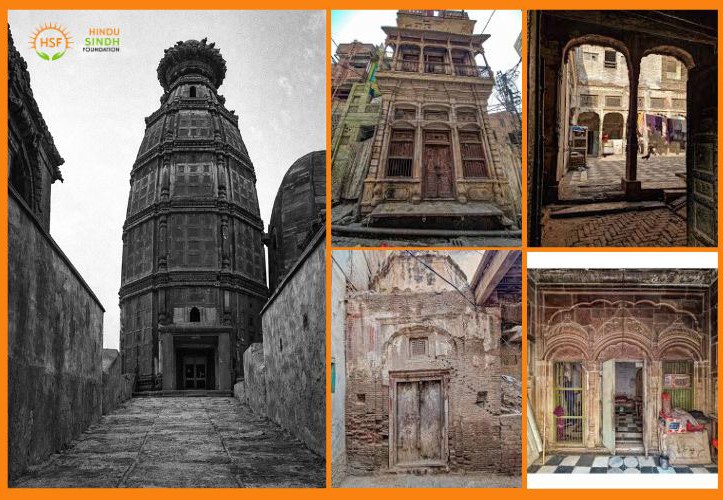
The Shiwala Teja Mandir, also known historically as the Shawala Teja Singh Temple, is an ancient Hindu temple located in the congested Dhaarowal area on Circular Road in Sialkot, in the Punjab province of Pakistan. This temple is a remarkable testament to the city’s rich multicultural past and is considered one of the region’s most important historic religious sites.
Historical Significance
Built by Sardar Teja Singh, the temple is dedicated to Lord Shiva, one of the principal deities in Hinduism. Historical records and heritage accounts suggest that this sacred site is over 900 to 1,000 years old, making it one of the oldest surviving Hindu temples in Pakistan’s Punjab region.
For centuries, the temple served as an active place of worship for the local Hindu community in Sialkot. However, like many minority religious sites in the area, its religious use changed dramatically after the Partition of India in 1947 when large parts of the Hindu population migrated. As a result, the temple was sealed and fell into disuse for many decades.
Post-Partition Closure and Damage
Following the upheaval of Partition, the temple remained closed and largely unattended. In 1992, during periods of communal tensions connected to events in India, parts of the temple were damaged by mobs, deeply affecting the structure and the site’s cultural integrity.
Over time, the temple’s condition deteriorated further due to neglect and environmental wear, and local reports noted that wild vegetation and structural damage had taken a toll on the site.
Reopening and Restoration Efforts
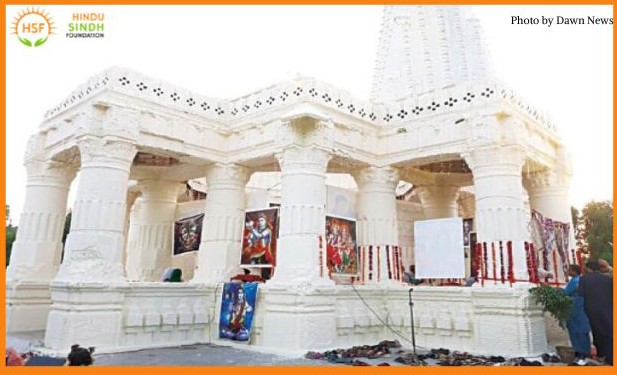
In a historic development, the Shiwala Teja Mandir was reopened in 2019 after being closed for around 72 years, allowing Hindu worshippers once again to access the site for religious rituals. This decision came in response to longstanding appeals from the local Hindu community and was overseen by Pakistan’s Evacuee Trust Property Board (ETPB), which manages minority religious heritage sites. The reopening marked an important moment in promoting religious harmony and cultural preservation.
The temple has since undergone renovation work to restore its historical features. Conservation activities — including structural consolidation, surface cleaning, and repair of damaged elements — have been carried out with efforts from the Walled City of Lahore Authority (WCLA) and government heritage initiatives.
In more recent developments, restoration efforts continue under provincial government direction, emphasizing the preservation of the temple as a heritage site and symbol of pluralistic history in Sialkot.
Cultural and Religious Importance
The reopening and ongoing restoration of the Shiwala Teja Mandir have deeper significance beyond architecture. For Pakistan’s Hindu community, the temple represents spiritual continuity and cultural memory, helping maintain living links to centuries of religious history in the region. The site also plays a role in broader efforts to promote interfaith understanding and coexistence.
Location and Visiting
The Shiwala Teja Mandir is situated in one of Sialkot’s older residential quarters, and visitors typically reach it by climbing steps from the road level, reflecting its traditional placement on a small elevated area. Its location and age make it a unique heritage destination within the bustling urban context of modern Sialkot.
The Shiwala Teja Mandir stands today not just as a religious structure, but as a living monument to history, communal resilience, and cultural diversity in one of South Asia’s oldest continuously inhabited cities.